
PulSAR MD System
Comprehensive Hemodynamics Simplified into One Powerful System
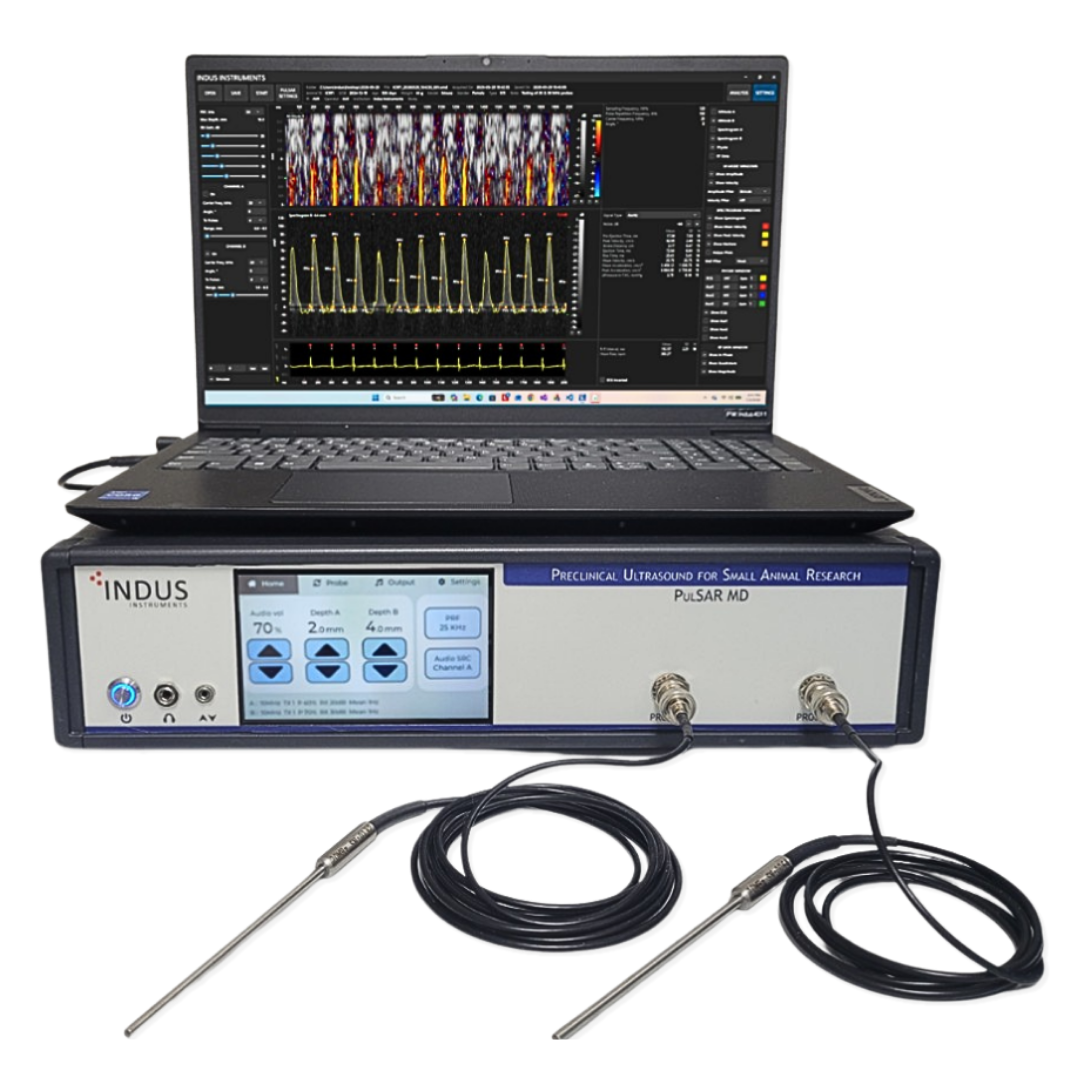
System Overview
Upgrading the Doppler flow velocity technology that has supported preclinical research globally for decades and contributed to hundreds of peer-reviewed papers, PulSAR offers increased functionality, optimized hardware, streamlined workflows, and fully automated analytics for a true all-in-one platform into comprehensive hemodynamics and vascular dynamics.
Applications
Cardiovascular Function
Provides key cardiac functional measurements for fast and reliable cardiac phenotyping in small animal models
Peripheral Vascular Disease
Measure hemodynamics in multiple vessels of interest, such as renal, carotid, iliac, femoral and saphenous vein.
Regional Blood Flow
Provides continuous, non-invasive measurements for changes in perfusion to organs.
Ligation Model Confirmation
Equipped to measure blood flow velocities up to 770 centimeters per second, this system is routinely used to monitor and stage progressive conditions, such as the severity of the transverse aortic constriction (TAC) model
Elasticity of Blood Vessels
The sole system capable of simultaneous two-site imaging, allowing precise measurement of blood transit time in vascular stiffness pulse wave velocity measurements.
Induced responses in microvascular beds
Through pulsatility and resistivity indices, easily monitor vascular impedance, downstream resistance, and compliance
Cerebrovascular Function, Stenosis, Perfusion, & Stroke
By comparing the velocity of blood in the left and right carotid arteries, the severity of artery narrowing (stenosis), brain blood supply (cerebral perfusion), and stroke risk can be assessed.
Noninvasive Volume Flow
Unlike conventional flow measurement systems, surgical placement of cuffs around blood vessels is not required. Instead, measurements are made from the skin surface
Key Measurements
Perfusion Changes
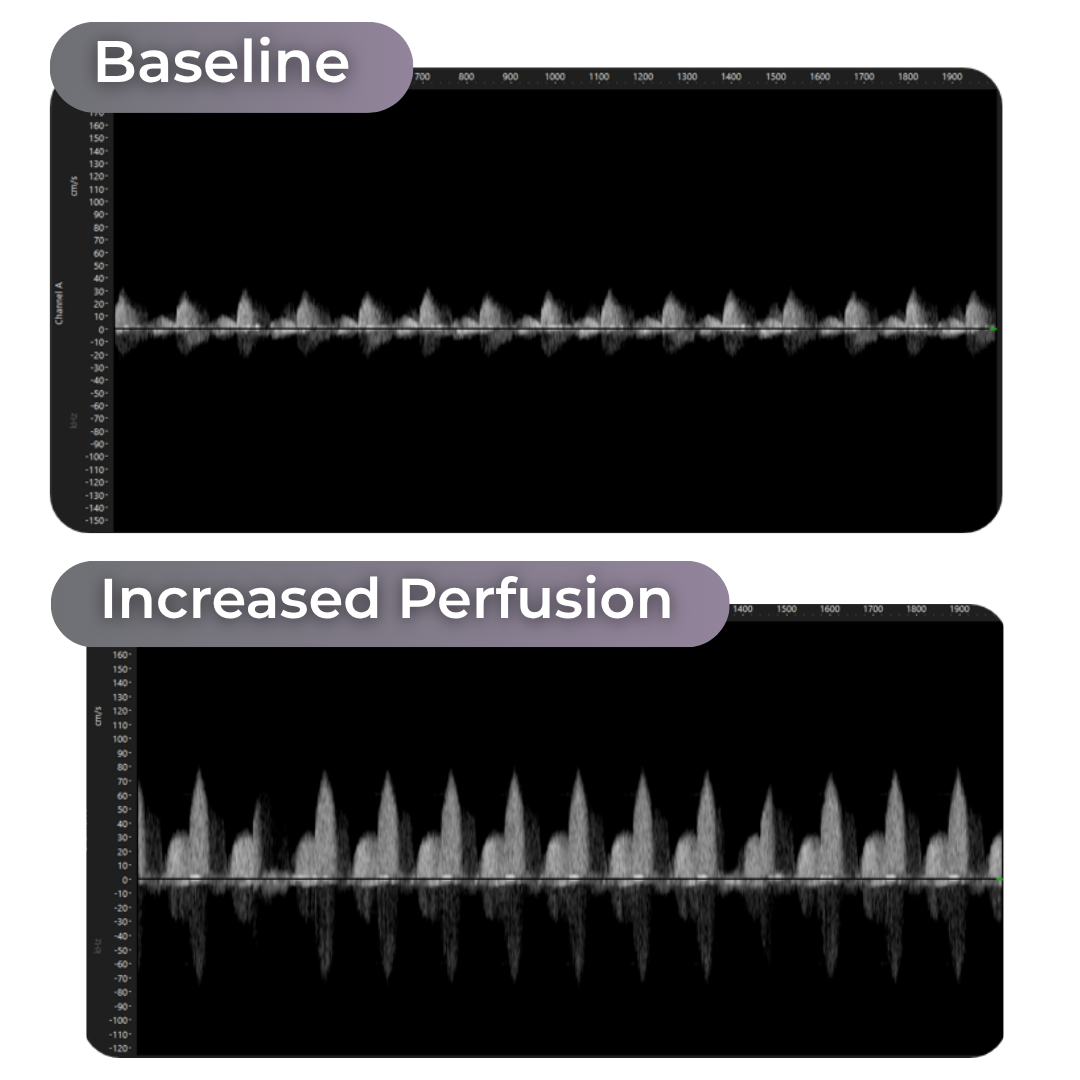
- Myocardial Perfusion
- Renal Perfusion
- Brain Perfusion
Vessel Elasticity
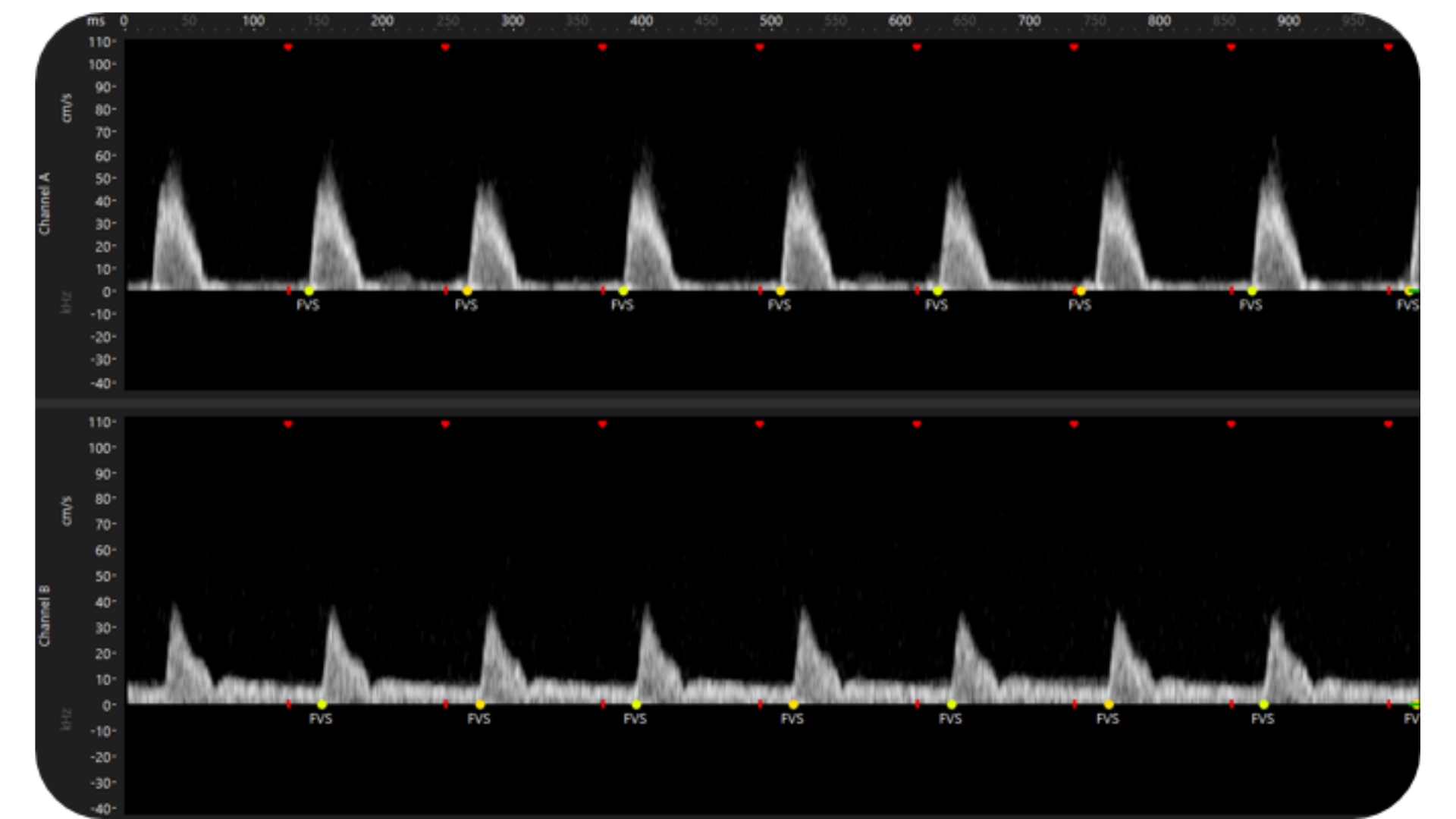
- Myocardial Perfusion
- Renal Perfusion
- Brain Perfusion
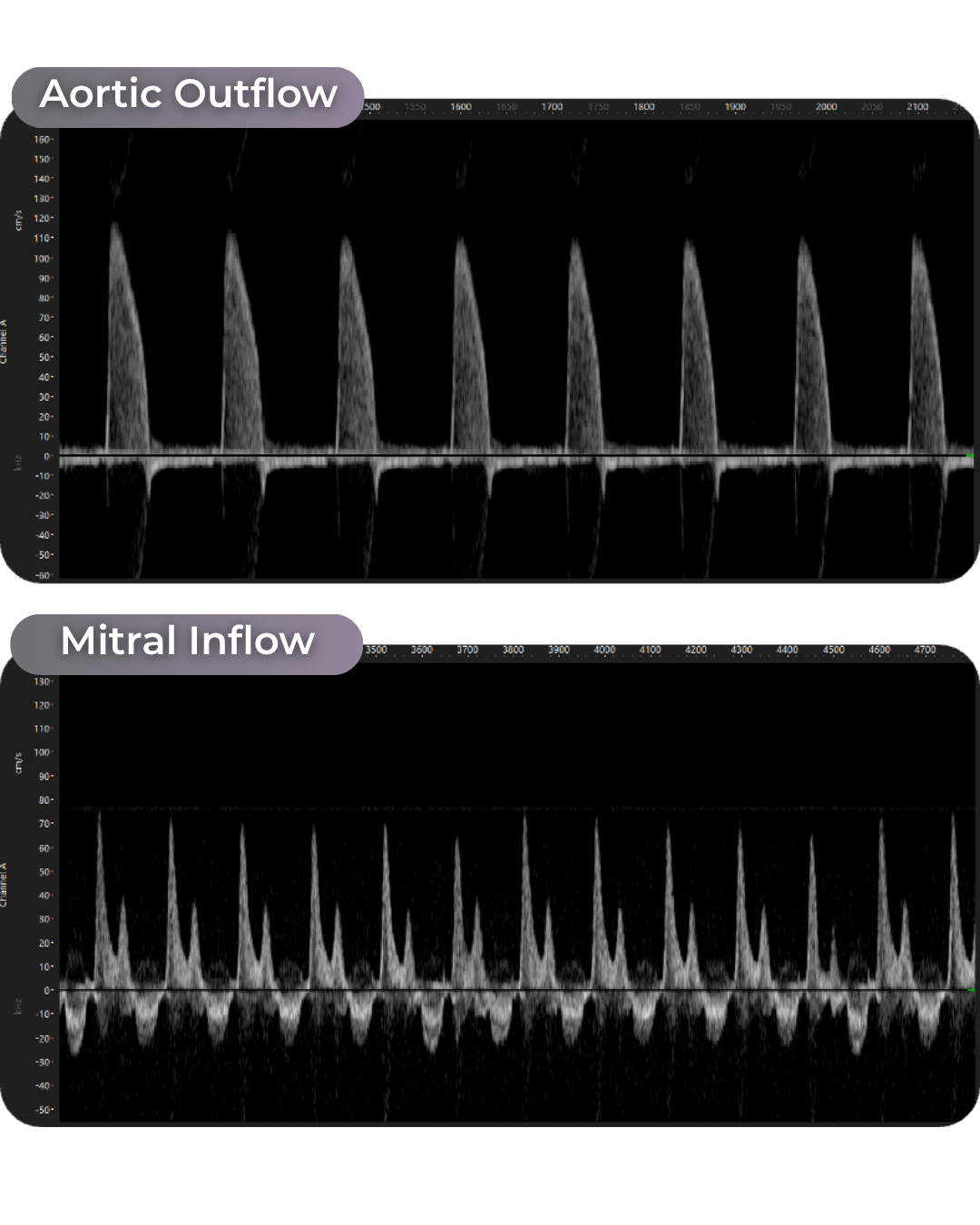
Cardiovascular Metrics
Hemodynamics
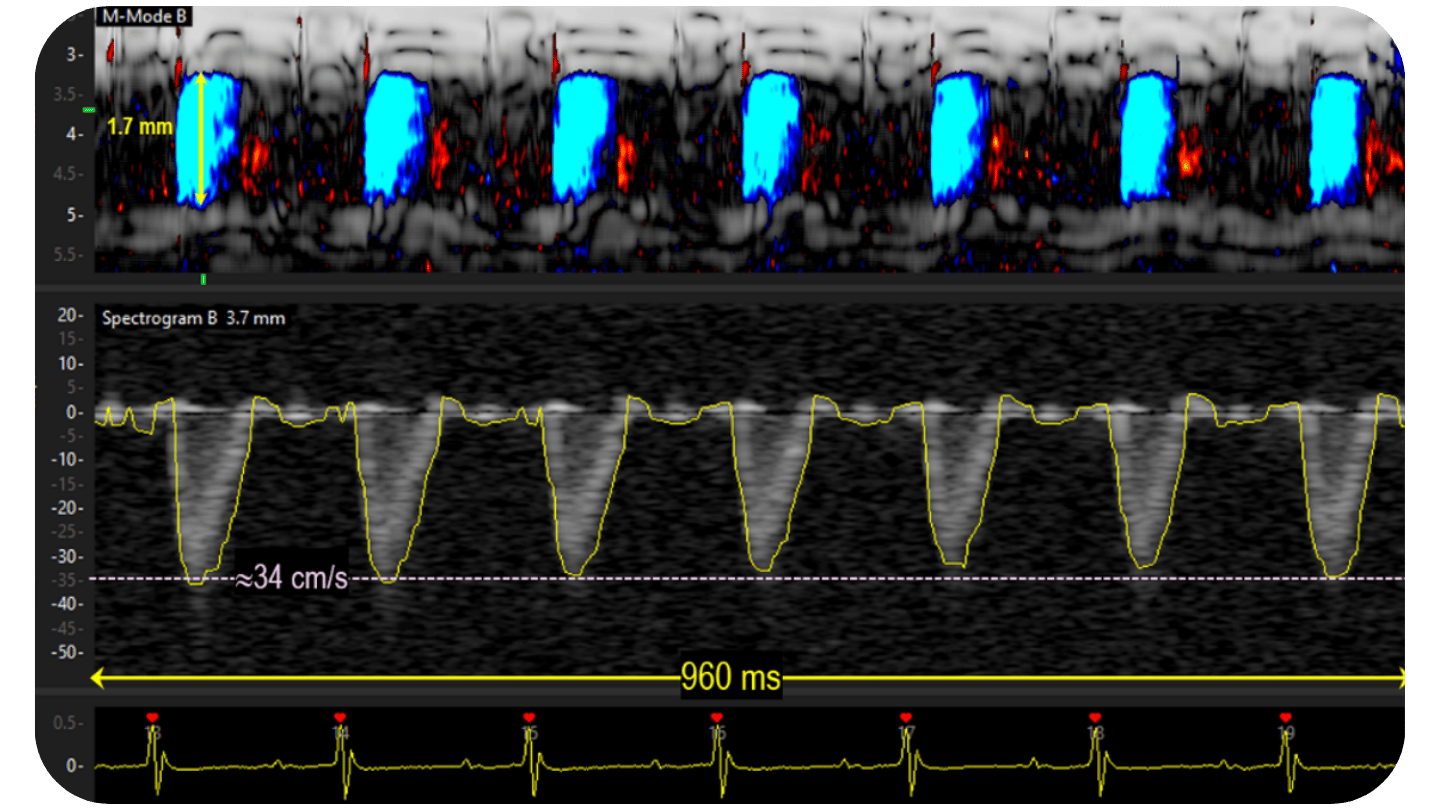
Integrated Color M-Mode allows for noninvasive metrics of:
- Vessel Diameter
- Volume Flow
Features & Benefits
| Feature | Benefit | ||
|---|---|---|---|
|
Ultrasound-based technology |
Allows noninvasive, longitudinal serial studies of cardiac and arterial function available to more labs than ever before without the need for 2D image guidance. |
||
|
Translatable Data |
Waveforms of velocity in mice are almost indistinguishable from signals recorded from similar sites in humans and other species |
||
|
Probe Design: thin, pencil-shaped |
Achieve precision that bulky probes can’t match. Our slim probe design aligns perfectly with blood flow, practically eliminating the angle-induced errors typical of standard ultrasound array probes. |
||
|
Real-Time Imaging |
Observe hemodynamics in real-time. |
||
|
Cost |
Imaging systems are a major investment, but if hemodynamic data is the only need, cut costs dramatically by choosing a specialized unit. |
||
|
Minimal Maintenance |
The system is built with the modern lab environment in mind with additional durability standards. |
||
|
Portability |
The system is built to take up minimal bench space and can easily be placed on a cart to be moved between locations. |
||
|
Fully Automated Analysis |
Instant Data Processing – users choose which analysis to be performed, and within seconds, the software calculates comprehensive reports for vessel dynamics, such as velocity, vessel stiffness metrics, pulsatility index, and resistivity index.
|
||
|
Color Doppler M-Mode |
It combines colour flow mapping with motion mode to give the speed, direction, and timing of blood flow in an area of interest. |
||
|
Compatible with Other Acquisition Systems |
Automated signal import – import in real-time signals like ECG, blood pressure, respiration, and others to allow for more comprehensive data sets |
||
|
High Sampling Rate |
High sampling rates provide excellent temporal and spatial resolution necessary when working with small animal models that have fast heart rates |
||
|
No Cost for Additional Software Licenses |
The PulSAR system software can be installed on multiple computers without the need for additional licensing or a dongle key for activation |
||
|
Analysis Compatibility with Previous Versions of the DFVS System |
File compatibility with multiple file formats ensuring seamless integration of older data sets |
||
Integrated Analysis Interface
Simultaneously acquire, visualize, and analyze cardiovascular data through an intuitive, automated software environment.

Real-Time Multi-channel Waveform Integration
Only system capable of imaging multiple vascular sites simultaneously.
Integrated Physiological Vital Monitoring
- ECG Cycle
- Respiration
- Oxygen Saturation
- Pressure
- And other bio-amplified signals
Comprehensive Study Documentation
Built-in note-taking and metadata capture for complete experiment traceability.
Automated Parameter Calculations
Instantly generate key cardiovascular measurements without manual analysis
Automated Physiological Vital Parameter Calculations
Continuously calculate physiological parameters throughout data acquisition.
Accessories & Add-ons
Hardware
Engineered for user ease of use and precision, the system is compact and fits easily within a compact lab.

PulSAR System and RSM-oX

PulSAR System
Integrated Electronics: (PDT, DSD, & PSD)

PulSAR MD System
Includes M-Mode /Doppler Workstation w/mouse (MDW; top), Integrated Electronics (PDT+DSD+PSD; bottom), and with Probes attached.

Integrated Electronics front panel has Doppler probe inputs and LCD touch panel for signal adjustment controls. It also has power button, audio connector, and depth control connector.

Integrated Electronics back panel has Doppler channel A and channel B outputs and Physio inputs, USB-C cable, ground connector, and the power adapter (+24V/3A DC) connector.

Tubing-mounted probe (10, 20, or 30 MHz) for noninvasive measurements.
Technical Specifications
|
Doppler Channels |
2 (A&B), each switchable between 10, 20, & 30 MHz |
||
|
Power |
110 VAC / 60Hz or 220 VAC / 50Hz |
||
|
Recorder Outputs |
Ch A: I, Q, Mean & RF; Ch B: I, Q, Mean & PRF |
||
|
Recorder Inputs |
4 Physio inputs: EKG, Aux1, Aux2, & Aux 3 |
||
|
External Ground |
Intended for chassis grounding, if required |
||
|
USB |
USB3 for PulSAR & Computer bidirectional communication |
||
|
Ultrasound Frequency |
10 MHz |
20 MHz |
30 MHz |
|
Pulse Repetition Frequency |
25, 50, 100 kHz |
25, 50, 100 kHz |
25, 50 kHz |
|
Transmitter Output |
25 Vpp into 50 Ohm / 35 Vpp into 50 Ohm |
||
|
Input Voltage Range |
±10 V |
||
|
Variable Range Gate |
1-10 mm (1-13 μs) |
||
|
Velocity Outputs |
110 VAC / 60Hz or 220 VAC / 50Hz |
||
|
Velocity Output Filters |
Phasic (50 Hz), Damped (15 Hz) & Mean (0.25 Hz) |
||
|
Probe Connection |
BNC Connector |
||
|
Front Panel |
Power Button, LCD Touch Panel, Audio, Depth, and BNC Doppler Probe Connectors |
||
|
Back Panel |
Channel A Outputs – RF, Mean Velocity, Doppler I & Q |
||
|
Back Panel other |
USB3-C, Ground connector, Power Adapter Plug |
||
|
Maximum Velocity Range at 100kHz PRF, 0° angle at 50kHz PRF, 0° angle at 25kHz PRF, 0° angle |
at 10 MHz 770cm/s
385cm/s
193cm/s |
at 20 MHz 385cm/s
193cm/s
96cm/s |
at 30 MHz 257cm/s
128cm/s
64cm/s |
Doppler Flow Velocity Measurements
| Systolic Indices: Aortic Outflow |
|---|
|
Peak Velocity |
|
Mean Velocity |
|
Peak Acceleration |
|
Mean Acceleration |
|
Pre-Ejection Time |
|
Ejection and Rise Time |
|
Stroke Distance |
| Systolic Indices: Aortic Outflow |
|---|
|
R-R Interval |
|
Heart Rate |
| Diastolic Indices: Mitral Inflow |
|---|
|
E-Peak and E-Stroke Velocity |
|
E-Time Duration |
|
E-acceleration & E-deceleration time |
|
E-Peak to ½ E-Peak Time |
|
E-Linear Deceleration Time and Rate |
|
A-Peak |
|
Stroke Distance |
|
A-Time Duration |
|
E-A Peak Velocity Ratio |
|
Isovolumic Contraction Time |
|
Isovolumic Relaxation Time |
| Peripheral Artery Indices: Carotid, Renal, Femoral, Ophthalmic, Tail |
|---|
|
Peak Velocity |
|
Mean and Minimum Flow Velocity |
|
Pulsatility Index |
|
Resistivity Index |
| Other Indices: Coronary, Transverse, and Abdominal Aorta |
|---|
|
Peak Diastolic Velocity (Coronary) |
|
Peak Systolic Velocity (Coronary) |
|
Diastolic & Systolic Area (Coronary) |
|
Ratios PSV/PDV & SA/DA |
|
Pulse Wave Velocity |
Mode Measurements
| Primary Indices: Measured – Left Ventricle |
|---|
|
LVIDs & LVIDd Short-axis |
|
LVAWs & LVAWd Short-axis |
|
LVPWs & LVPWd Short-axis |
|
LVESD & LVEDD Short-axis |
|
LVIDs & LVIDd Long-axis |
|
IVSs & IVSd Long-axis |
|
LVPWs & LVPWd Long-axis |
| Secondary Indices: Left Ventricle – Calculated |
|---|
|
Ejection Fraction |
|
Fractional Shortening |
|
End Diastolic Volume |
|
End Systolic Volume |
|
Stroke Volume |
|
Cardiac Output |
|
Posterior Wall Thickness |
|
Relative Wall Thickness during diastole and systole |
|
Left Ventricular Mass |
|
Left Ventricular Mass Index |
| Artery Indices: |
|---|
|
Vessel Diameter |
Fully Automated Software
- High throughput capacity – Complex Analysis in just one click

- Speed highlight – Accelerate your research workflows by switching from manual to fully automated analysis.
(Comparison of PulSAR MD software to other commonly used software)

- Standardized reproducible metrics
- The advanced algorithms eliminate guesswork and technical barriers that previously required specially trained personnel.
- Whole data files can be analyzed rather than 3 – 4 cardiac cycles
- Decreases variability
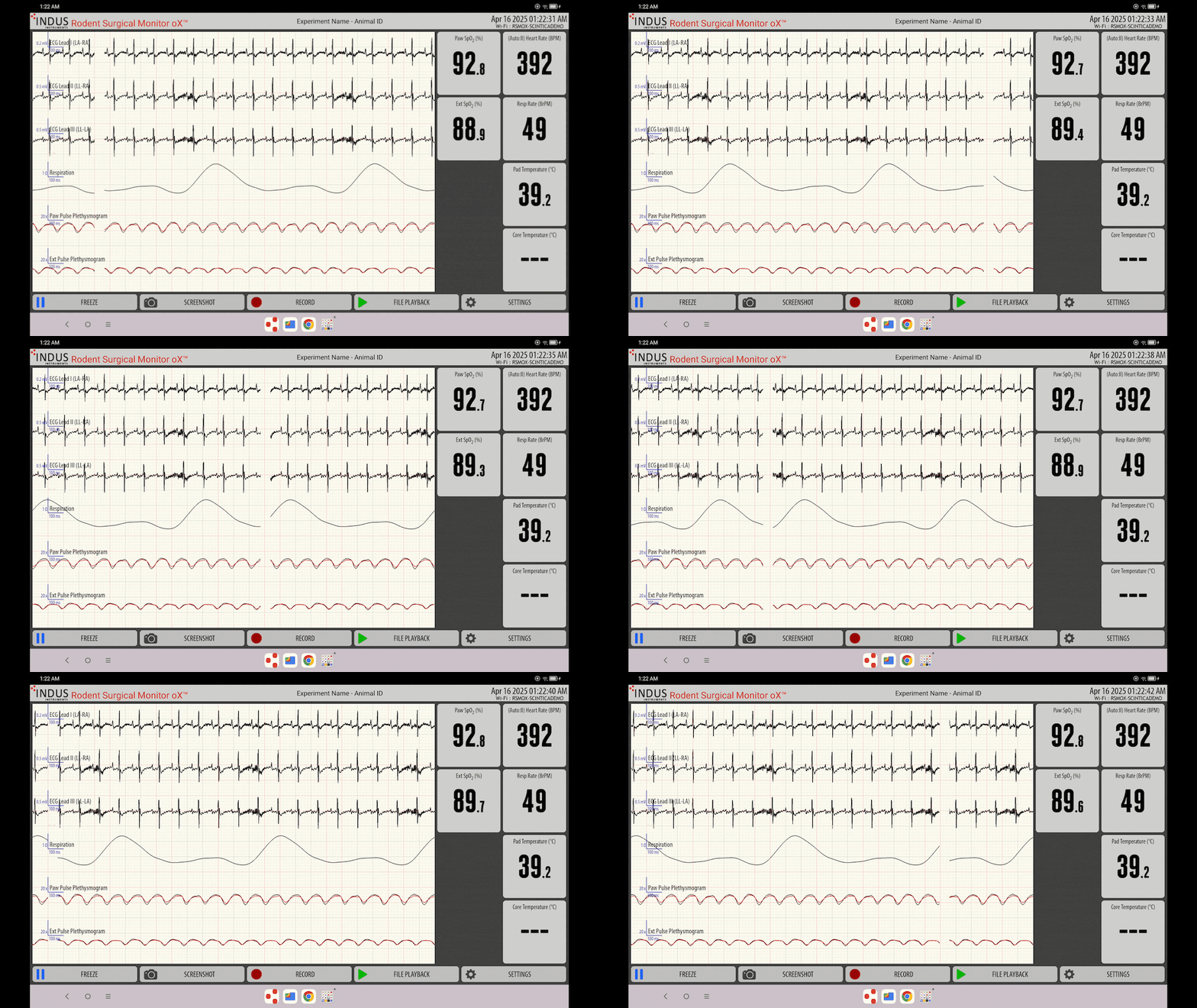
Compatible Physiological Platform
- The Rodent Surgical Monitor systems combine real-time, noninvasive physiological vital signs monitoring and surgical warming in a platform designed for mice, rats, guinea pigs, and other similarly sized animals. Physiological signals can be directly integrated into the PulSAR interface for comprehensive data collection.
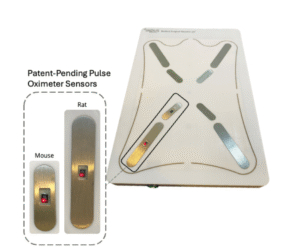
- Newly integrated patent-pending oxygen saturation sensors within the platform for SpO2 readings through the paw of the animal
-

ECG
-

Respiration
-

Core Body Temperature
-

Oxygen Saturation
-

Ventricular and Systemic Pressure


High-Frequency Probes
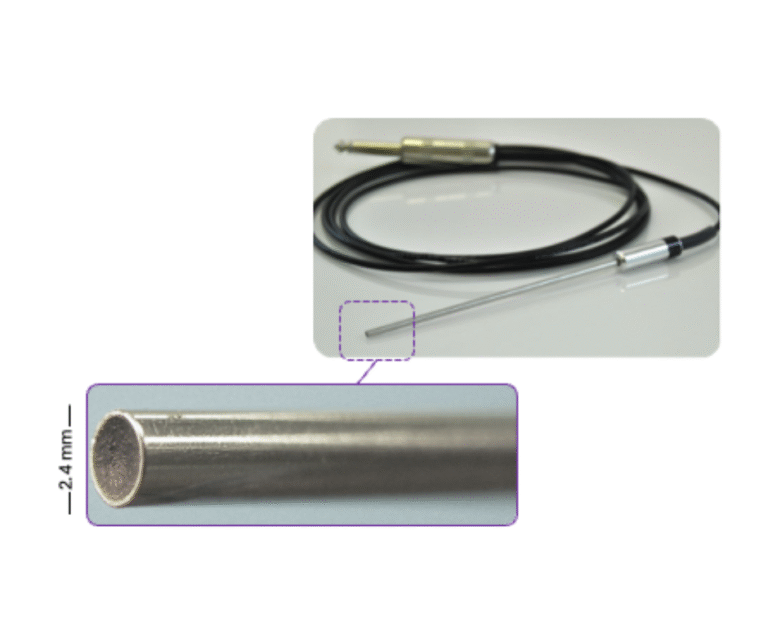
These probes are designed with high-quality piezoelectric crystals to provide superior spatial resolution for blood flow velocity measurements.
Available high-frequency probes:
- 10 MHz probe: Resolution of 150μm, Max Depth 40mm
- 20 MHz probe: Resolution of 75μm, Max Depth 30mm
- 30 MHz probe: Resolution of 50μm, Max Depth 15mm
-
Unique Pencil-like Design
~2 mm diameter probes allow for easier alignment to blood flow, which means more accurate data as compared to typical ultrasound probes.
-
Adaptability
Two probes can be used to image simultaneously at two different sites of interest. Taking variability out of applications like pulse wave velocity.
-
Durable
These probes are designed with durability in mind and are built to withstand impacts normally seen within labs.
-
Can be Handheld or Mounted with Micromanipulator
For long-term data collection, micromanipulators can be utilized to hold the probe stably
Micromanipulator
When precise probe positioning is critical, the micromanipulator provides stable, accurate, and repeatable control of the probe. It eliminates unintentional movement and ensures consistent alignment of the region of interest throughout the experiment.
- Precision Control: enables fine adjustments along the X, Y, and Z axis for optimal probe orientation.
- Stability and Reproducibility: maintains consistent positioning for long-term and high-sensitivity measurements.
- Ideal for Dynamic Imaging: perfect for capturing long-term or time-dependent blood flow data where stability is essential.


Implantable Doppler Transducers
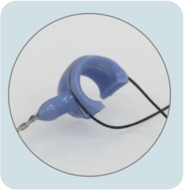
Doppler transducers provide accurate flow velocity measurements in applications where handheld probes are not practical. They are well-suited for:
Chronic and implantable studies
Intraoperative vascular assessment
Use in larger animal models
Engineering and industrial flow applications
The transducer cuff is constructed from flexible silicone and split longitudinally, allowing direct placement around the vessel for secure and stable data acquisition.
Available Cuff Sizing
-
1.0 mm
-
1.3 mm
-
1.7 mm
-
2.2 mm
-
2.5 mm
-
2.8 mm
*Custom sizing is available

Built on Decades of Trusted Research
PulSAR is the next evolution of our proven Doppler Flow Velocity technology.
Built on a platform that has supported preclinical research for decades and contributed to hundreds of peer-reviewed publications.
Looking for the previous generation of this system? Explore it here.