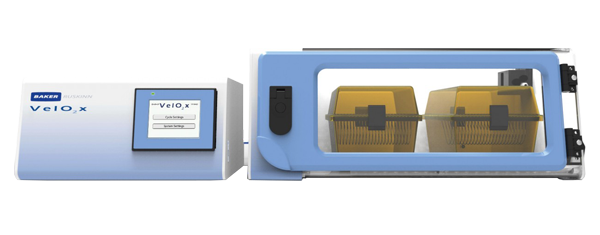
This study investigates how intermittent hypoxia drives lung fibrosis using precise oxygen cycling with the VelO2x in vivo hypoxia chamber in bleomycin-treated mice.
Background: Idiopathic pulmonary fibrosis (IPF) is a chronic lung disease driven by repeated epithelial injury, abnormal repair, and excessive extracellular matrix deposition. Obstructive sleep apnea (OSA) has been observed in many IPF cases, suggesting a link. The hallmark feature of OSA, intermittent hypoxia (IH), promotes oxidative stress and inflammation, which also occur in the development of fibrosis. Until now, the molecular mechanisms underlying how IH contributes to IPF development and progression have been elusive.
Aim: To explore how IH contributes to lung fibrosis and identify the molecular drivers.
Methods (e.g., how the VelO2x was used): Male C57BL/6J mice were used in a bleomycin (BLM)-induced model of lung fibrosis. To replicate the conditions of OSA (i.e., hypoxia and reoxygenation), mice were subjected to IH using the VelO2x in vivo hypoxia chamber. Oxygen levels were controlled between normoxia (21% O2) and hypoxia (down to 7% O2) for 30 cycles/hour for 8 hours/day (during the sleep phase). Histological assessment of lung injury, collagen deposition, and molecular analyses of pro-fibrotic and ER stress markers via qPCR and western blotting were performed.
Results: The VelO2x enabled researchers to characterize the effects of IH on lung fibrosis. IH alone had little influence but worsened outcomes for BLM-mice, especially when IH exposure occurred in advance. The fine-tune control of oxygen cycling helped reveal that pre-exposure to hypoxia led to greater weight loss, increased lung injury, and greater collagen deposition compared to BLM-only.
Conclusion: The study demonstrates that IH exacerbates lung fibrosis, especially when it precedes fibrotic injury, highlighting a potential causal role for OSA in worsening IPF. This research suggests IH acts as a modulator, rather than a primary cause, of fibrosis. Clinically, this supports the idea that treating OSA may help mitigate fibrosis progression in IPF patients.
Product Highlight and 3R’s Approach (Reduce, Replace, Refine): The VelO2x allows users to precisely control oxygen levels (in 0.1% increments), cycling timing, and exposure durations, ensuring reproducibility and biological relevance, which ultimately eliminates the need for repeat experiments. The non-invasive chamber accommodates either 1 or 2 mouse cages, meaning that animals never have to leave their home. Therefore, the VelO2x is also compatible with group housing (further minimizing animal stress). Oxygen levels are quickly increased and decreased, reducing the overall time of hypoxia exposure for the animals. During hypoxic exposure, gases are stable and automatically controlled, eliminating fluctuations and human handling variability, reducing unintended confounding stress responses, and ensuring better welfare during chronic studies.

Figure 1. Experimental design of Bleomycin instillation and Intermittent Hypoxia exposure. Mice were exposed to Intermittent Hypoxia (IH; 30 cycles/hour, 8 h/day, Nadir 7% O2, magenta color) or intermittent air (IA, white color) (day 14). Fourteen days later, Bleomycin (BLM, black color) or PBS was instilled intratracheally (day 0). Mice were then exposed at d1 to IA or IH; black hatched bars are for BLM/IA exposure, blue color for IH exposure (14 d), blue hatched black for the Co-challenge group, and magenta hatched black for the Pre-exposure. Two weeks later (d14), mice were sacrificed and lungs were extracted for molecular and histological analyses.