Publication Highlight: Mitochondrial Oxidative Stress Mediates Bradyarrhythmia in Leigh Syndrome Mitochondrial Disease Mice
Importance
Leigh Syndrome is a severe neurodegenerative inherited disorder with the development of characteristic lesions within the brain, typically within the basal ganglia and the brainstem1. Symptoms become apparent usually within the first year of life with most children passing away by the age of 3, typically from respiratory or heart failure2. This disease directly affects how the mitochondria work, especially affecting mitochondria within cells from the brain, nerves, and spinal cord1.
The prognosis is poor, since Leigh Syndrome is progressive and there is no known cure with a current focus on supportive care for symptoms and managing progression3. To reduce progression of this disease, many researchers are trying to elucidate the mechanistic pathways for the onset of cardiomyopathy since 18 – 21% of Leigh Syndrome patients develop this comorbidity, which worsens prognosis4,5. Figuring out mechanisms that drive this pathology and potential therapeutics to target different aspects of this disease will be pivotal6.
Overview
Recently published within Antioxidants, researchers from the University of Iowa showed that Mitochondrial oxidative stress can be targeted with treatment of Mitotempo, mitochondrial protective peptide SS31, and has applicability as a potential treatment for Leigh Syndrome patients7.
The Ndufs4 knockout mouse (Ndufs4−/−) was utilized within this research. NDUFS4 encodes for a critical component of the Mitochondrial Complex I, which is vital to proper mitochondrial functioning and metabolism8. Ndufs4−/− is a leading mouse model to study the Leigh syndrome pathophysiology within multiple tissue systems9,10.
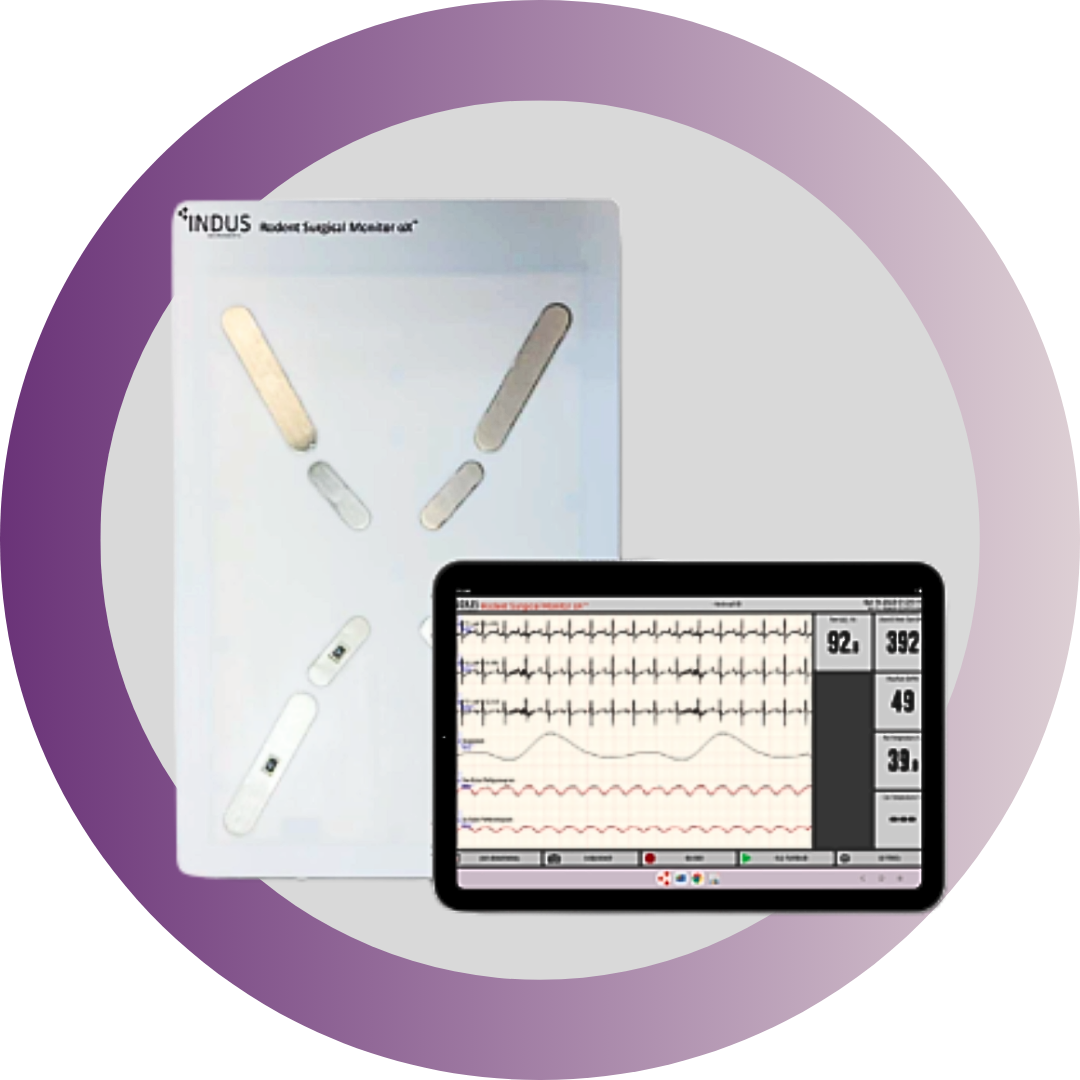
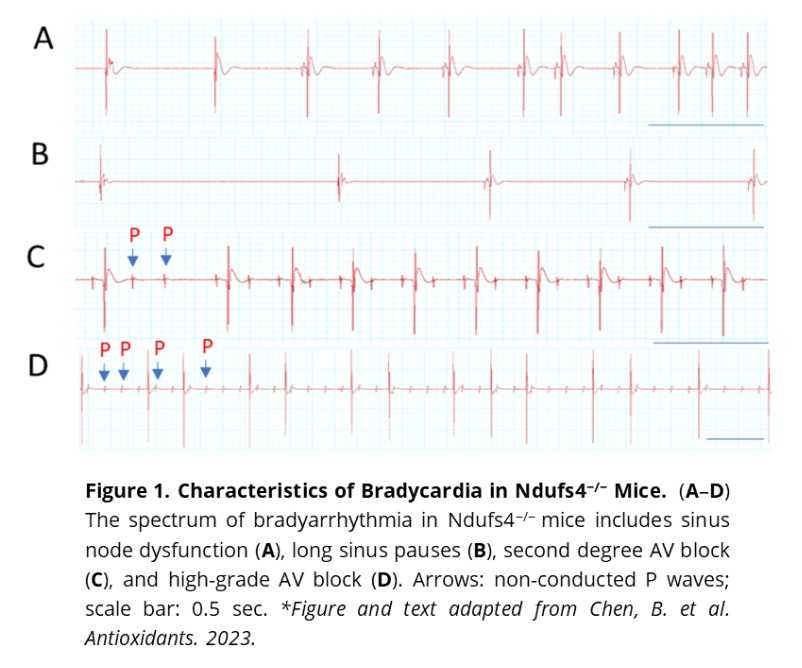
Using the Rodent Surgical Monitoring System, the researchers acquired ECG recordings from conscious Ndufs4−/− mice for 40 – 60 minutes. The researchers then counted arrhythmic events and showed that Ndufs4−/− mice develop cardiac bradyarrhythmia, including frequent sinus node dysfunction and episodic atrioventricular (AV) block, as highlighted by the abnormal ECGs tracings shown within Figure 1.
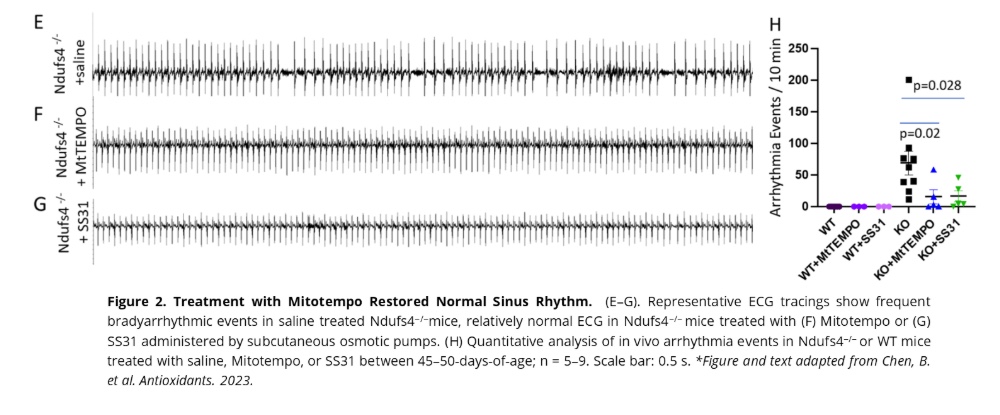
Treatment with Mitotempo offers targeted mitochondrial protection by reducing reactive oxygen species. The researchers used within this work to improve mitochondrial function within the heart. Treatment with Mitotempo nearly abolished arrhythmic events by restoring normal sinus rhythm within the Ndufs4−/− mice, as shown in Figure 2 via a quantitative ECG analysis (Ndufs4−/− frequency of 62, Ndufs4−/− frequency of 62; Ndufs4−/− with treatment of Mitotempo frequency of 2.7). Survival analysis also showed that treatment with Mitotempo significantly increased survival of the Ndufs4−/− mice by 20%.
The researchers demonstrate that mitochondrial oxidative stress is a direct mechanistic driver of bradyarrhythmia in a mouse model of Leigh Syndrome caused by Ndufs4 deficiency. Importantly, mitochondrial-targeted therapies, like Mitotempo, reduced reactive oxygen species, restored normal sinus rhythm, and significantly extended the lifespan of Ndufs4−/− mice. This work highlights mitochondrial antioxidants as promising, potentially translatable therapies for treating cardiac complications seen in Leigh Syndrome patients.
References
1. LEIGH SYNDROME – Child Neurology Foundation. https://www.childneurologyfoundation.org/disorder/leigh-syndrome/.
2. Schubert, M. B. & Vilarinho, L. Molecular basis of Leigh syndrome: a current look. Orphanet J. Rare Dis. 15, (2020).
3. Leigh syndrome | UMDF. https://umdf.org/leigh-syndrome/.
4. Lee, H. F., Tsai, C. R., Chi, C. S., Lee, H. J. & Chen, C. C. C. Leigh Syndrome: Clinical and Neuroimaging Follow-Up. Pediatr. Neurol. 40, 88–93 (2009).
5. Sofou, K. et al. A multicenter study on Leigh syndrome: disease course and predictors of survival. Orphanet J. Rare Dis. 9, (2014).
6. Magro, G., Laterza, V. & Tosto, F. Leigh Syndrome: A Comprehensive Review of the Disease and Present and Future Treatments. Biomedicines 13, 733 (2025).
7. Chen, B., Daneshgar, N., Lee, H.-C., Song, L.-S. & Dai, D.-F. Mitochondrial Oxidative Stress Mediates Bradyarrhythmia in Leigh Syndrome Mitochondrial Disease Mice. Antioxidants 2023, Vol. 12, Page 1001 12, 1001 (2023).
8. NDUFS4 NADH:ubiquinone oxidoreductase subunit S4 [Homo sapiens (human)] – Gene – NCBI. https://www.ncbi.nlm.nih.gov/gene/4724.
9. Quintana, A., Kruse, S. E., Kapur, R. P., Sanz, E. & Palmiter, R. D. Complex I deficiency due to loss of Ndufs4 in the brain results in progressive encephalopathy resembling Leigh syndrome. Proc. Natl. Acad. Sci. U. S. A. 107, 10996–11001 (2010).
10. Bakare, A. B., Lesnefsky, E. J. & Iyer, S. Leigh Syndrome: A Tale of Two Genomes. Front. Physiol. 12, 693734 (2021).
Want to learn more about the Rodent Surgical Monitor (RSM)?