Publication Highlight: The Synergistic Power of Intermittent Fasting and Threonic Acid in DIO Mice

This study evaluates metabolic changes using DXA body composition analysis in diet-induced obese (DIO) mice

Authors

Oh, S.; Park, S.; Kim, E.-K.

Obesity is a major public health concern, yet many pharmacological solutions show challenges with maintaining long-term benefits or leading to significant side effects. Intermittent fasting (IF) is a safe alternative, but its weight loss efficacy is modest. Ascorbic acid (AA), also known as vitamin C, has been identified for its anti-obesity effects. However, its therapeutic use has been limited by its instability and rapid metabolism into various compounds, including threonic acid (TA).  

A new study by Oh et al., 2025 aimed to investigate the anti-obesity effects of combining IF with AA or its metabolite, TA, using a diet-induced obese (DIO) mouse model.  

To do this, they used male and female C57BL/6N mice fed a high fat diet (HFD) for 16 weeks. Thereafter, daily i.p. injections of either a vehicle, AA (up to 15 mmol/kg), or TA (1.5 mmol/kg) were performed for 50 days concurrent to either ad libitum feeding or alternate-day fasting. Importantly, the iNSiGHT DXA system was used to analyze body composition (lean and fat mass), indirect calorimetry was employed to measure energy expenditure, and LC-MS/MS provided data about AA metabolism in the brain.  


What they found was truly remarkable...

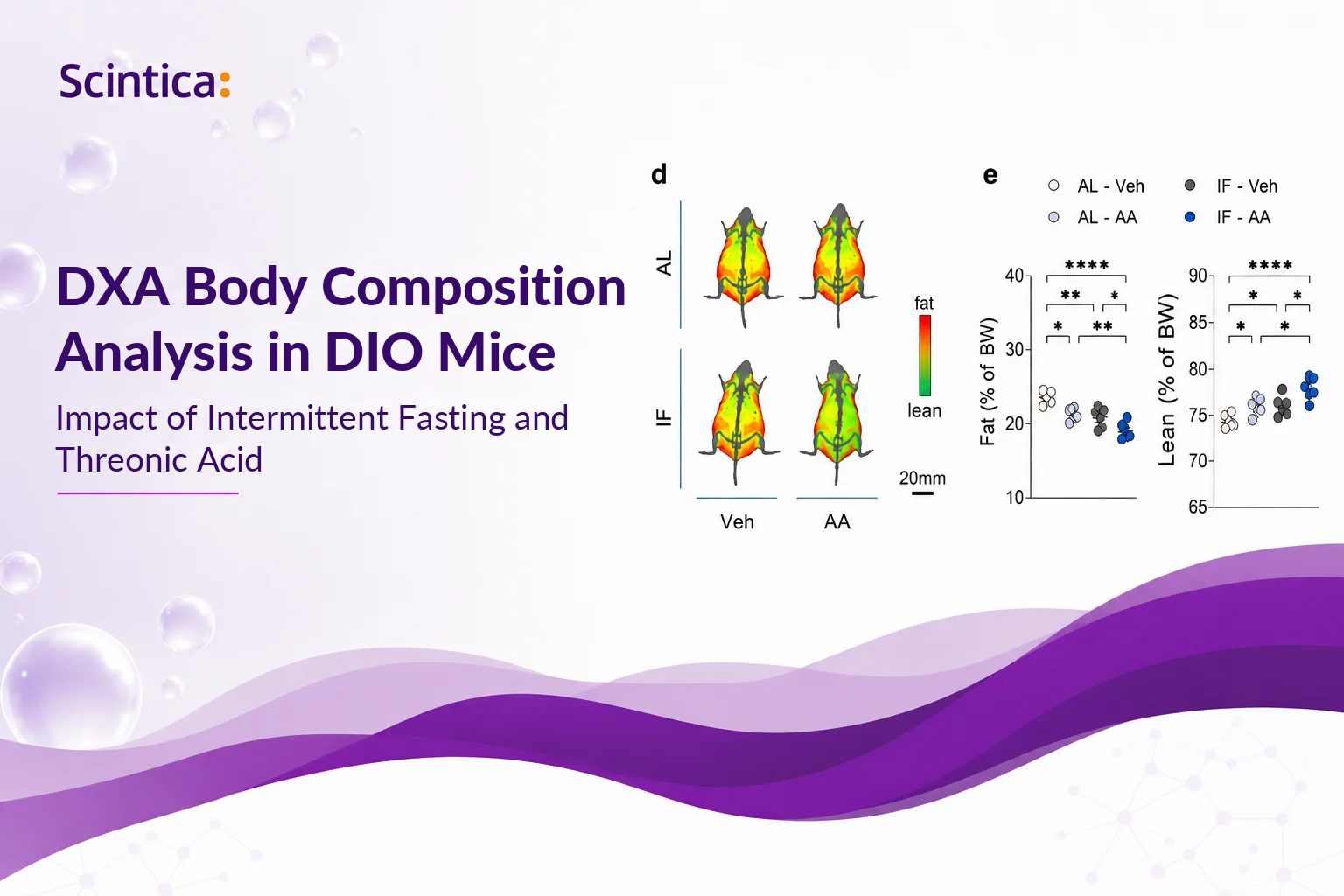
DXA body composition analysis in diet induced obesity mice

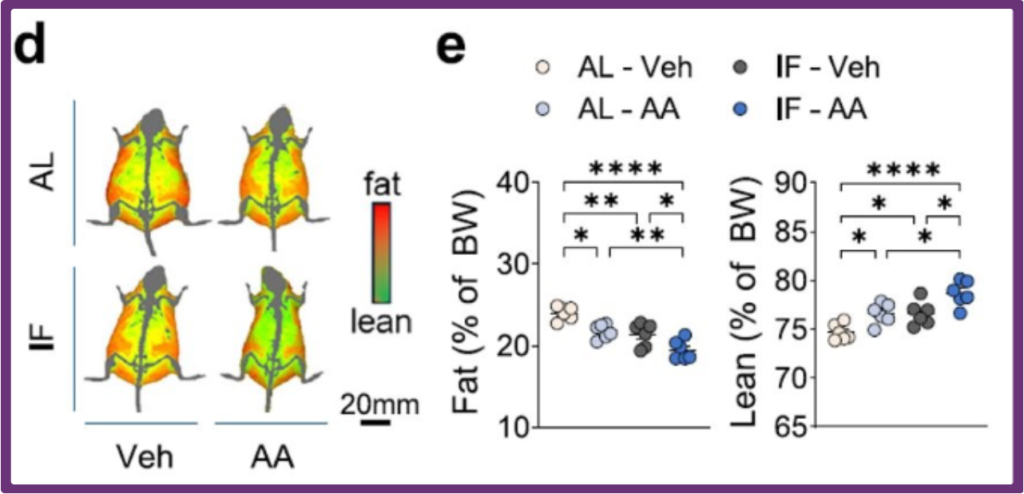
Adapted from Fig. 1 (PMID: 41507308). Combining AA with IF enhances anti-obesity effects in DIO mice. D) Representative images of body composition. Red, fat mass; green, lean mass. E) Fat mass (left) and lean mass (right) on day 50 (n = 6). 


  • When IF with TA administration were combined, DIO mice demonstrated a significant reduction in body weight (23.7%) compared to either intervention alone, suggesting a synergistic effect. 
  • TA was identified as the metabolite responsible for suppressing orexigenic neuropeptides (NPY and AGRP), leading to reduced hunger signals during fasting.  
  • IF led to glucose depletion and an upregulation of GLUT3 transporter; collectively, more TA was able to enter neurons since it could bind to GLUT3 with less competition by glucose. 
  • The combination therapy significantly improved glucose tolerance, insulin sensitivity, and energy expenditure while increasing thermogenesis in brown adipose tissue. 
     

This led the authors to conclude that when combined, TA and IF appear to synergistically support weight loss and improve markers of insulin sensitivity. Taken together, these strategies may enhance the efficacy of obesity treatments.  

Scintica is pleased to highlight the iNSiGHT DXA system in this research where it was used to evaluate the body composition of diet-induced obese (DIO) mice following 50 days of treatment. The Insight software enabled: 
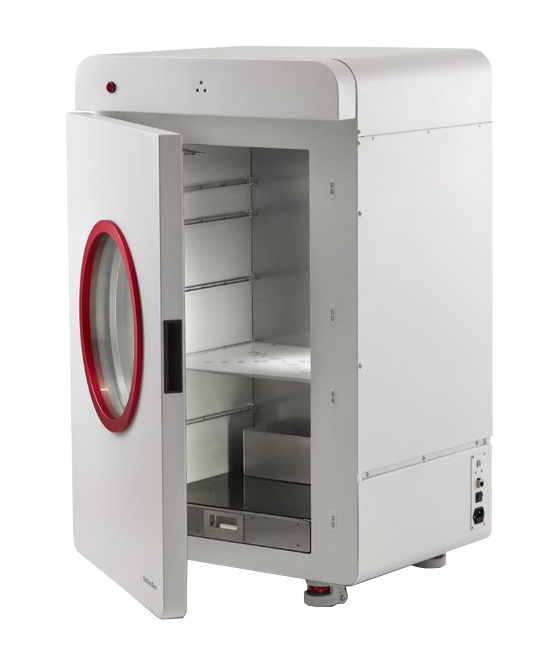
  • Fat mass and lean mass measurements in under 30 seconds 
  • Color maps to visualize the region-specific soft tissue type (green for lean, red for fat – color scheme is customizable!) 
  • A user-friendly experience 

Book your FREE small group virtual demo today and see the iNSiGHT DXA software in action! 


Disclaimer: The DXA system was used for data acquisition, while all statistical analyses and graph creation were performed using GraphPad Prism software.Â