Publication Highlight: A Targeted Lipid Nanoparticle Platform for T Cell-Specific Non-Viral DNA Delivery & In Vivo CAR-T Generation
Authors
Jaime Fernández Bimbo, Eline van Diest, Daniel E Murphy, Ator Ashoti, Martijn J W Evers, Suneel A Narayanavari, Diana Pereira Vaz, Hanneke Rijssemus, Christina Zotou, Nadine Saber, Zhiyong Lei, Peter Mayrhofer, Maurits Geerlings, Raymond Schiffelers, Jacek Lubelskioth
Background
Ex vivo CAR-T therapies has been transformative in cancer treatment, but are limited due to high cost, long manufacturing times, and restricted access for patients. As a promising alternative, in vivo CAR-T approaches have shown promising preclinical efficacy while overcoming previous manufacturing challenges. However, this new strategy relies on messenger RNA (mRNA) delivery or viral vector, which have limited efficiency, durability and scalability. The purpose of this study was to address these challenges using a DNA-based lipid nanoparticle.
Key Findings
- A targeted lipid nanoparticle (tLNPs) co-delivering mRNA and minicircle DNA (mcDNA) was engineered to compare untargeted and CD7/CD3-targeted formulations. Dual CD7/CD3-targeted system enabled efficient, activation-free, and T-cell specific delivery of both nucleic acids.
- In a leukemia xenograft model, a single intravenous dose of NCtx-CD19 was shown to generate stable in vivo CAR-T cells.
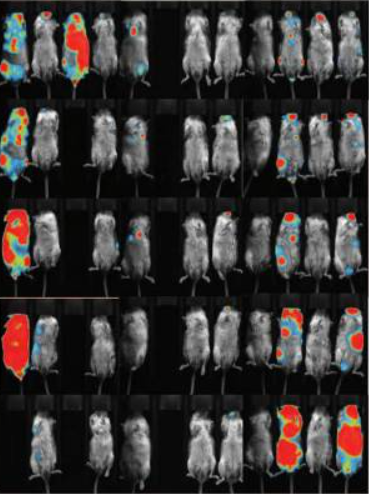
- Luciferase-based bioluminescent imaging (BLI) showed that NCtx delivering dual CD19/CD22 CAR induced robust in vivo CAR-T generation and durable tumor control in humanized mouse models, leading to near complete tumor elimination and improved survival.
- BLI imaging and survival analysis was also used to measure durable tumor control. Robust antitumor efficacy was maintained across a range of doses, demonstrating potent and scalable in vivo CAR-T engineering.
Conclusion
This study established NCtx as a highly efficient, non-viral platform for in vivo CAR-T cell generation, enabling stable DNA integration and durable antitumor responses at doses far lower than existing mRNA-based approaches. A combined approach of CD3- and CD7-mediated targeting allows NCtx to overcome barriers to DNA delivery in primary T cells while also providing a scalable and potentially safer alternative to complex ex vivo manufacturing workflows.
Product Highlight
The Newton 7.0’s bioluminescent imaging capabilities provided a non-invasive method to tracking tumor burden and therapeutic response over time, allowing for a longitudinal assessment of treatment efficacy in the same animals. BLI imaging was able to distinguish rapid tumor progression in control groups from sustained tumor regression or elimination following NCtx-mediated in vivo CAR-T generation.
Want to learn more about the Newton 7.0 Optical Imaging System?