As the push for New Approach Methodologies (NAMs) accelerates worldwide, pharmaceutical laboratories and the dermo-cosmetics industry are no longer just exploring alternatives to animal testing; they are actively seeking robust, scalable, and most importantly human-relevant models.
We are sharing an exclusive overview of the advantages Laser-Assisted Bioprinting (LAB) provides to support this initiative.
Understanding the NAMs Initiative
The New Approach Methodologies (NAMs) initiative promotes the development and adoption of innovative research strategies that replace the use of animal models in testing the safety and efficacy of therapeutics and drugs.
These approaches include advanced in vitro human-based systems, such as organoids, organ-on-chip platforms, and complex 3D tissue models, as well as in silico computational models that use artificial intelligence, bioinformatics, and predictive modeling to simulate biological processes. Importantly, many of these platforms are designed to better capture the complexity of the human immune makeup, enabling researchers to study immune responses, inflammation, and disease mechanisms in a more physiologically relevant context.
The Role of the Bioprinter:
To Fabricate Human Models
Bioprinting enables the fabrication of complex biological structures with precise spatial organization. In contrast, traditional 2D cultures fail to replicate the in vivo spatial architecture of tissues found in the body. High-resolution Laser Induced Forward Transfer (LIFT) technology bridges this gap by acting as a high-precision assembly of tissue models.
The Next generation Bioprinting Systems, NGB-RTM, are designed and developed by Poietis as a commercialized model of LIFT.
LAB is relying on Laser Induced Forward Transfer (LIFT) technology, this nozzle-free process utilizes short laser pulses to propel biomaterials with elevated accuracy. By eliminating the high-pressure shear stress found in traditional extrusion methods, LAB allows researchers to engineer highly complex, clinically relevant tissues without compromising cellular viability.
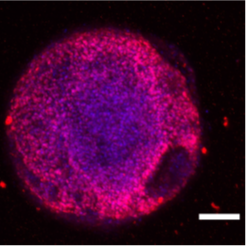
Multicellular Spheroid Model
Key Advantages
- High Cell Viability (>95%): Because LAB is a gentle, non-contact process, it drastically reduces mechanical stress. Whether you are working with fragile stem cells or complex cell aggregates, the technology preserves cell integrity, functional phenotype, and long-term biological activity – essential for long-term toxicity studies.
- Picoliter & Micrometric Resolution (<50 µm): Achieving cellular-level resolution is crucial for mimicking native tissues. LAB’s precision allows for the exact spatial arrangement of single cells, enabling the creation of advanced Reconstructed Human Epidermis (RHE) and intricate organ-on-a-chip models performs similar to human tissues.
- High-Throughput for GMP Translation: Speed doesn’t have to sacrifice precision. With print speeds reaching up to 5 kHz, LAB bridges the gap between early-stage laboratory prototyping and large-scale, Good Manufacturing Practice (GMP) compliant production of standardized human models.
- Exceptional Multi-Material Versatility: The system easily accommodates a wide range of bio-inks, including composite hydrogels and matrices laden with growth factors, allowing for the rapid assembly of sophisticated, multi-phase tissue interfaces (such as the dermis-epidermis junction).
Take the Next Step
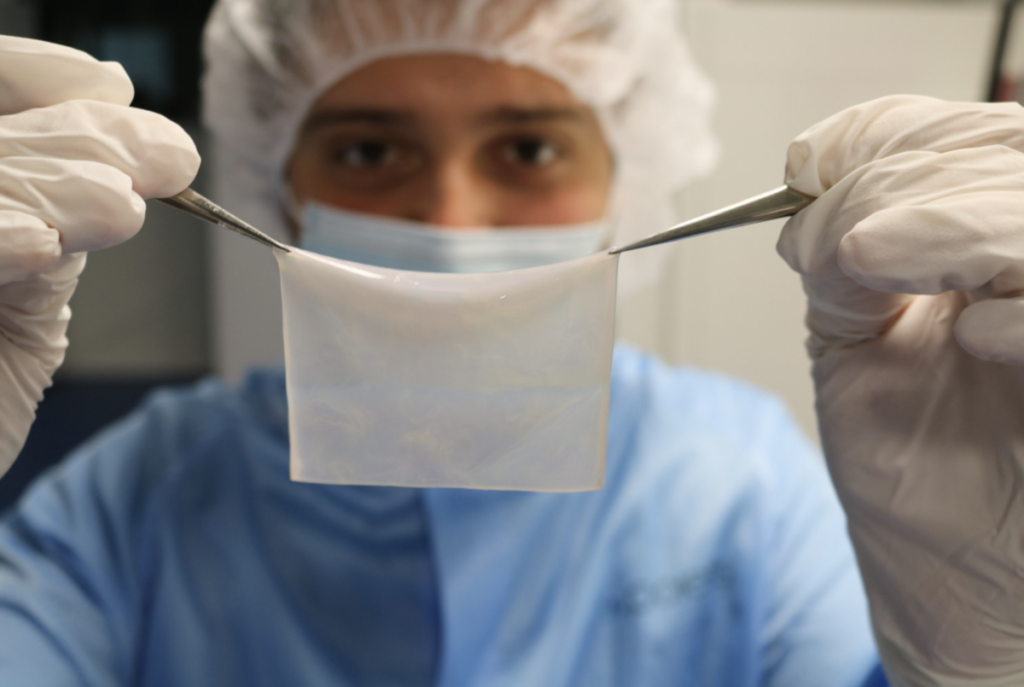
Human full thickness dermo-epidermal Skin Model
To fully grasp the engineering parameters, comparative data, and future clinical applications of this groundbreaking technology, we highly recommend reading the complete analysis from our partner.
Read the full article on Poietis’ website to dive deeper into the science and data behind Laser-Assisted Bioprinting.
Ready to bring Bioprinting to your lab? Contact the Scintica team today to schedule a discussion about your specific application and how NGB-R bioprinter can contribute to your research. Let us show you how this technology can accelerate your transition to advanced NAMs!