
IL-27 Attenuates Fat Accumulation in a High-Fat Diet Mouse Model

Leveraging NMR technology to evaluate body composition and distinguish fat mass reduction from lean tissue loss in mice with adipose-targeted IL-27 overexpression 

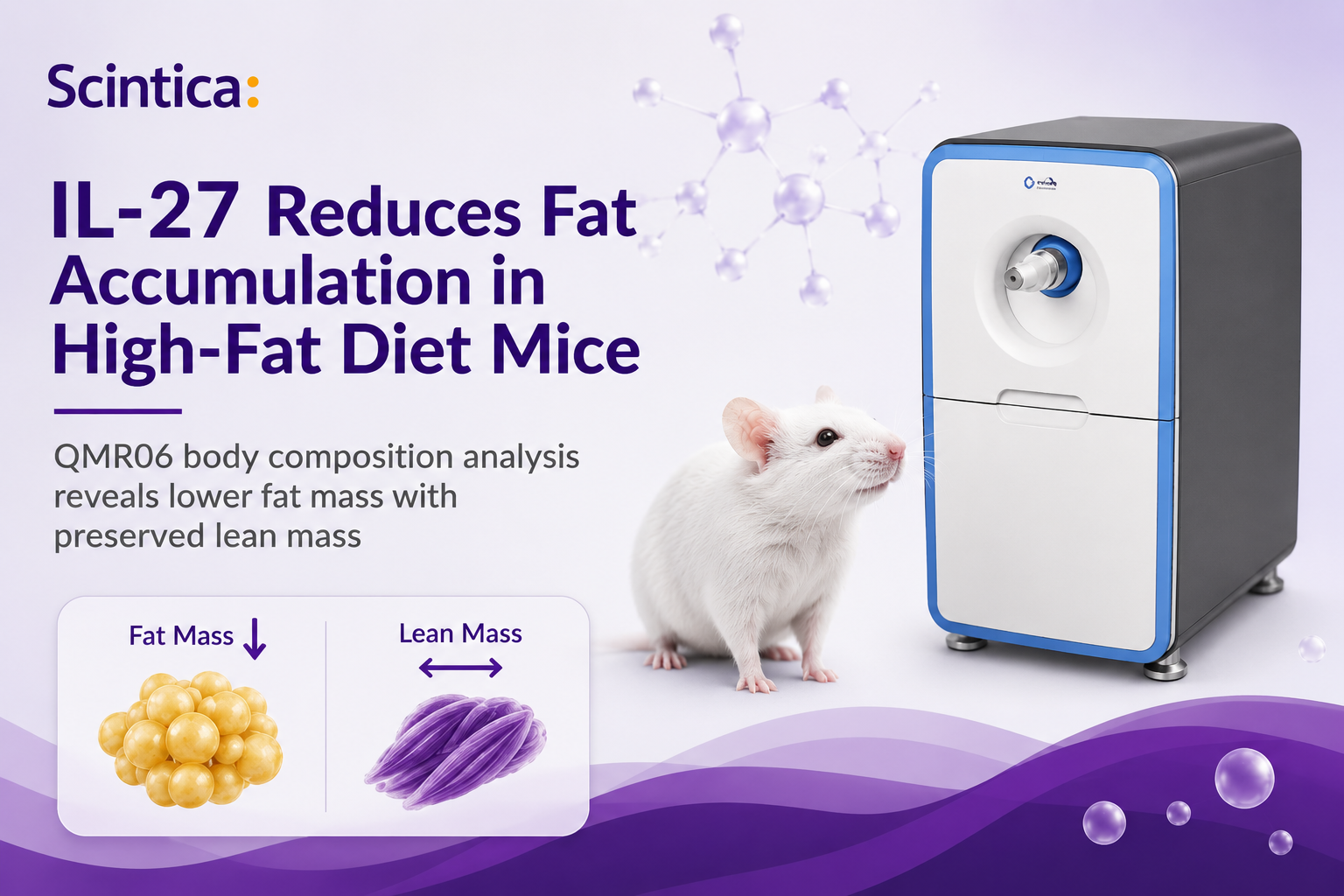
IL-27 reduces fat accumulation in high-fat diet mice, measured with QMR body composition analysis showing lower fat mass and preserved lean mass.

Original study: Zhong Y. et al.
Published in: Communications Biology (2025)
PMID: 40108289

Overview

Obesity, a global health epidemic, can arise with an increase in adipocyte size and number, resulting from energy storage exceeding adipocyte thermogenesis. IL-27, a heterodimeric cytokine, promotes thermogenesis in brown adipose tissue, but its role in adipogenesis is less clear. 

This study used both in vivo and in vitro models to determine whether IL-27 attenuates adipogenesis and improves obesity-related metabolic outcomes. 

Key Takeaways

  • Mice injected with an AAV for IL-27 to induce adipose-specific overexpression demonstrated less overall weight gain in response to high-fat diet (HFD) compared to those that received the control vector, despite similar food intake.  
  • Body composition analysis using Niumag’s QMR06-090H system established that lower body weights were associated with greater fat mass loss and preservation of lean mass.  
  • Treatment with AAV-IL-27 also improved glucose homeostasis, insulin sensitivity, and total cholesterol levels. 
  • The findings suggest that adipose-specific IL-27 overexpression can reduce obesity-related metabolic outcomes by limiting fat accumulation in response to a HFD.

Study Design and Body Composition Analysis

Male C57BL/6J mice were fed either a 60% high-fat diet or a control diet for 12 weeks. An adeno-associated virus (AAV) engineered to overexpress IL-27 in adipose tissue, or a control vector, was delivered via tail vein injection.  

At the end of the 12-week period, the QMR06-090H body composition analyzer was used to measure fat and lean mass. These results gave insights into the whole-body effects of diet-induced obesity with or without IL-27 overexpression.  

Results

Same Food Intake, Less Weight Gained

Mice treated with the IL-27 vector showed less overall weight gain beginning at week 7, even though there was no significant difference in food intake compared to the control vector group.  

Less Fat Gained, Greater Lean Mass Preserved

Measurement with the QMR06-090H device established that the lower body weights of the AAV-IL-27 group were due to an attenuation in fat mass gained because of HFD. Therefore, this whole-body finding was not the result of lean mass lost, which was an important distinction in proving that IL-27 overexpression specifically targeted fat mass.  

Improved Glucose and Lipid Outcomes

The authors observed that IL-27 treatment improved glucose homeostasis, lowered peak blood glucose levels, supported better insulin sensitivity. Further, the treated mice also showed lower total cholesterol levels. 

Graphs and body composition analysis showing IL-27 overexpression reduced fat accumulation, improved glucose tolerance, and preserved lean mass in mice fed a high-fat diet.

Figure 3. IL-27 reduced body weight in high-fat diet-fed mice and improved glucose and lipid metabolism. The figure includes body weight, food intake, fat and lean mass, glucose tolerance, insulin tolerance, total cholesterol, and triglyceride measurements.

Conclusion

Collectively, the data showed that adipose-specific IL-27 overexpression was associated with better obesity-related metabolic outcomes by attenuating fat accumulation and supporting the body’s response to glucose and insulin.  

Product Highlight:

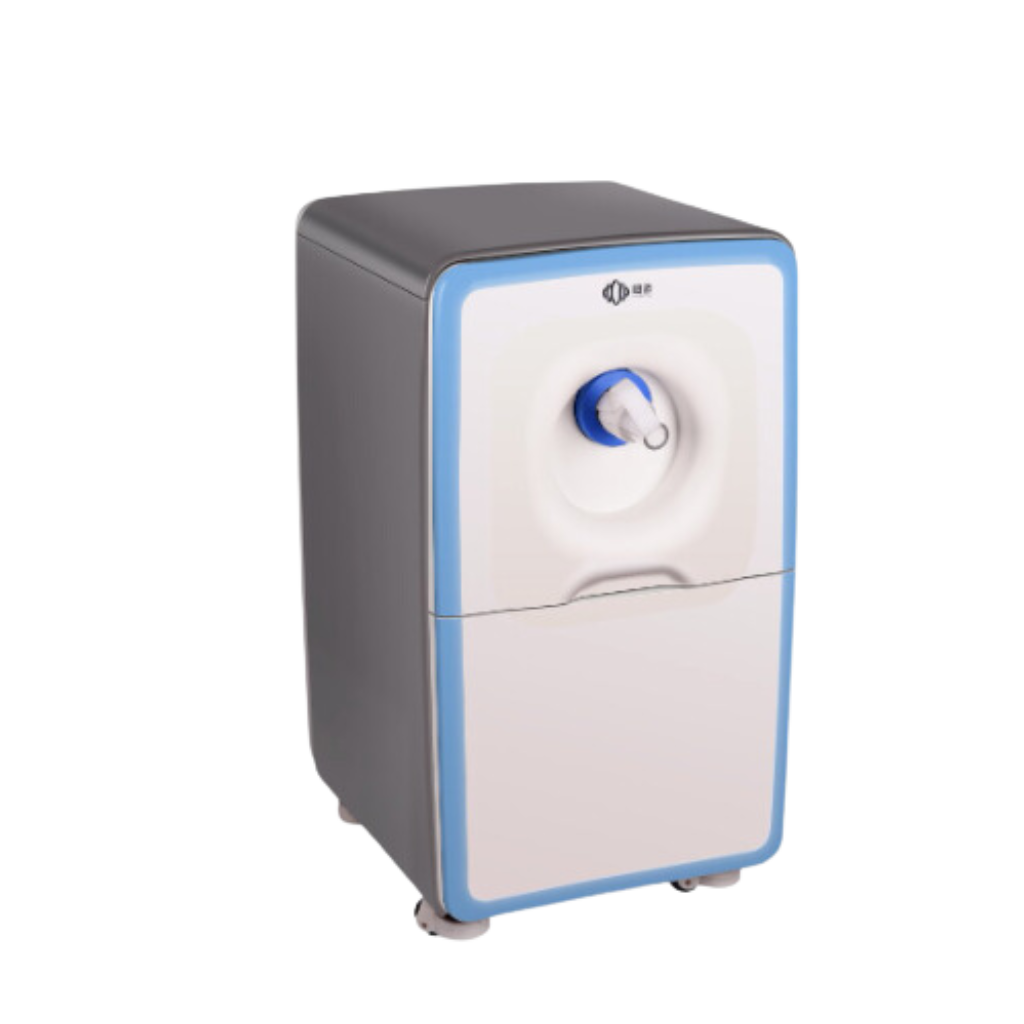
QMR06-090H Analyzer

The QMR06-090H provides non-invasive whole-body composition measurements that can be repeated over time. In this study, fat and lean mass measurements helped researchers determine that the IL-27-related difference in body weight was associated with reduced adiposity rather than loss of lean tissue.
Related Resources

Supporting the 3Rs

Reduction

Repeated body composition measurements can allow the same animals to serve as their own controls, reduce variability, and limit the need for additional cohorts. High sensitivity may also help detect phenotypic changes earlier.

Refinement

A scan time of less than three minutes requires minimal restraint and can reduce handling stress. Measurements are performed in awake subjects without ionizing radiation, helping preserve natural physiology and avoid anesthesia-related shifts in metabolism and hydration.

References

Zhong Y, Yang S, Li S, Yuan S, Chen X, Long H, Wu H, Guo Y, Wang T. IL-27 alleviates high-fat diet-induced obesity and metabolic disorders by inhibiting adipogenesis via activating HDAC6. Communications Biology. 2025;8:460. doi:10.1038/s42003-025-07918-y. PMID: 40108289.

Written by Scintica Instrumentation.
Scintica supports preclinical researchers across North America with advanced imaging, physiology, molecular imaging, and translational research technologies.