
Integrating In Vivo DEXA/DXA and Ex Vivo Micro-CT in Preclinical Orthopaedics
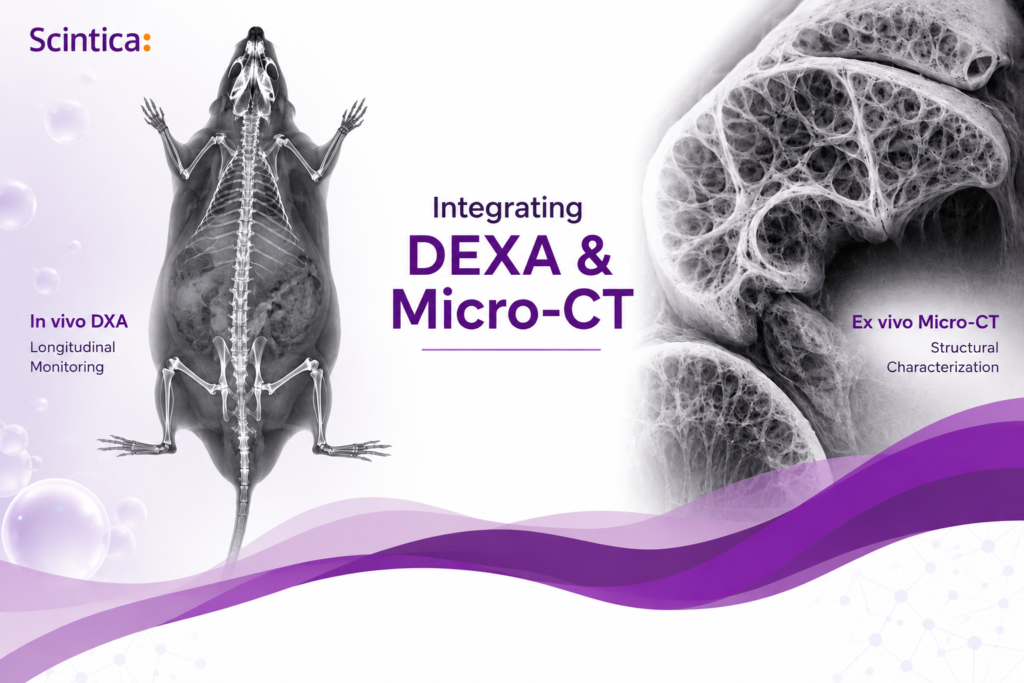
Preclinical orthopaedic studies often require both longitudinal monitoring and detailed structural analysis to fully understand skeletal changes. Integrating DXA and micro-CT in preclinical orthopaedics allows researchers to combine longitudinal bone mineral density measurements with high-resolution assessment of bone microarchitecture and structural quality.
Overview
In preclinical orthopaedics, complex research questions are best answered when multiple orthogonal approaches are combined. By integrating complementary imaging modalities, such as in vivo dual energy X-ray absorptiometry (DEXA/DXA) and ex vivo micro-computed tomography (micro-CT/µCT), data quality is enhanced, leading to stronger biological interpretation and better translational success.
Key Takeaways
While these technologies are sometimes viewed as competing methods, they are fundamentally different tools designed to answer different biological questions.
- DXA excels at rapid, low-dose, and repeatable measurements of areal bone mineral density (BMD), bone mineral content (BMC), and body composition over time.
- Micro-CT supports high-resolution 3D visualization of tissue microarchitecture and structural integrity.
- Combining DXA and micro-CT strengthens biological conclusions while supporting ethical animal research through the 3Rs: Replacement, Reduction, and Refinement.
Together, DXA and micro-CT offer a more complete picture of bone health, disease progression, and therapeutic efficacy.
| DXA | Micro-CT |
|---|---|
| Longitudinal monitoring | Endpoint characterization |
| Low-dose imaging | High-resolution imaging |
| Whole-body assessment | Microarchitecture analysis |
| BMD & BMC | Trabecular & cortical analysis |
| Fast scans | Detailed structural insights |
Why Combine DXA and Micro-CT?
A combined workflow allows researchers to monitor progression longitudinally with DXA and perform detailed endpoint characterization with micro-CT.
As a practical example, areal BMD alone does not fully describe how bone is organized, if cortical bone is thinning, or whether structural integrity is compromised. Micro-CT adds critical information about bone quality, microstructure, and mechanical relevance.
Likewise, a 3D micro-CT reconstruction may demonstrate detailed bone microarchitecture, however it does not provide the same practical efficiency for repeated longitudinal whole-body monitoring.
This is why DXA and micro-CT are so powerful when integrated into the same study.
DXA vs Micro-CT: A Practical Comparison
Study Fit and Radiation Exposure
DXA uses low-dose ionizing radiation and is well suited for in vivo longitudinal tracking of biological changes in the same animal over time. This enables:
- Repeated measurements that are accurate and reproducible
- Smaller cohort sizes and lower inter-animal variability
- Strong alignment with the 3Rs principles
Ex vivo micro-CT uses greater radiation exposure and longer acquisition times to deliver high-resolution, detailed endpoint measurements. Users gain insights into:
- Detailed structural analyses
- Smaller regions of interest
- Implant integration
- High-resolution trabecular and cortical evaluation
Simply put, DXA indicates the quantity of bone that changes over time, while micro-CT evaluates how the bone is organized structurally.
2D vs 3D Imaging: Dimensionality and Interpretation
DXA produces 2D projection images. The resulting bone mineral density measurement is an areal BMD value expressed in g/cm2. Since DXA represents 3D anatomy in a 2D projection, bone thickness and geometry influence the outputs, trabecular and cortical compartments cannot be separated, and architectural interpretation is very limited.
Importantly, this does not diminish DXA’s value, but rather it defines the biological question DXA is best suited to answer. DXA is suited for:
- Monitoring global skeletal changes
- Evaluating treatment response
- Measuring whole-body or large-region BMD/BMC
- Assessing body composition alongside skeletal outcomes
On the other hand, micro-CT reconstructs volumetric datasets with extremely high spatial resolution. This allows researchers to assess bone quality and outcomes based on trabecular and cortical compartments, bone volume fractions, microstructural fractures, implant interfaces, and more.
This distinction becomes especially important in diseases such as osteoporosis, where trabecular deterioration may occur before overt changes are visible in areal BMD.
Resolution, Region of Interest, and Scan Time
DXA systems are optimized for rapid acquisition and large field-of-view imaging. Advantages include:
- Whole-body imaging and large regions of interest
- Fast scan times and high throughput
- Efficient longitudinal workflows
The trade-off is spatial resolution. DXA does not resolve fine trabecular microarchitecture or subtle cortical morphology like a micro-CT system. Advanced systems can achieve:
- Micron-scale pixel and voxel sizes
- Submicron resolution at high magnification
- Detailed 3D visualization of bone morphology
The trade-offs that come with this high level of detail include smaller fields of view, longer scan times, more complex and labour-intensive reconstruction workflows and analyses, and greater potential for inter-user variability.
Collectively, many researchers combine fast longitudinal DXA measurements with targeted ex vivo micro-CT endpoint analysis.
Applications in Preclinical Orthopaedics
Osteoporosis and Osteopenia
DXA tracks systemic changes in BMD and BMC longitudinally throughout treatment. Micro-CT can evaluate whether improvements correspond to increased trabecular thickness, improved trabecular connectivity, enhanced cortical integrity, and reduced microarchitectural deterioration.
Osteolytic Bone Disease
In diseases such as multiple myeloma, DXA can monitor overall BMC loss over time. Micro-CT detects focal osteolytic lesions, cortical perforation, and trabecular destruction.
Growth and Development
DXA enables rapid whole-body characterization of bone and body composition changes throughout development. Micro-CT provides deeper insight into growth plate morphology, trabecular maturation, cortical development, and structural organization.
Spinal Fusion and Implant Integration
DXA can longitudinally monitor mineralization trends. Micro-CT confirms fusion formation, bridge continuity, implant integration, structural robustness, and the 3D architecture of the fusion mass.
Together, these methods support both temporal and structural understanding.
Product Highlights
iNSiGHT DXA
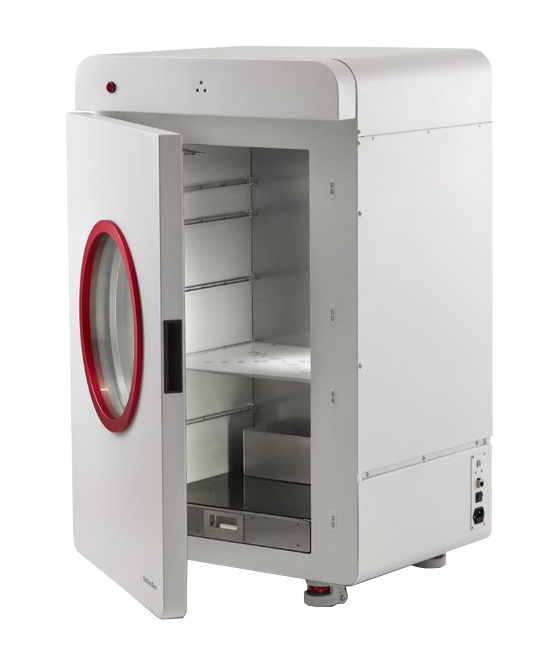
The iNSiGHT DXA system is designed for preclinical bone mineral density and body composition assessment.
View key features
- The fastest in vivo scan time (<25 seconds)
- Low-dose ionizing radiation
- Quantification of BMD, BMC, fat mass, and lean mass
- Whole-body and regional analysis
- Large field of view (16.5 x 25.5 cm)
- Animal welfare-focused workflow design
- Preclinically validated against gold standard methods for BMC and body composition (chemical carcass analysis and bone ashing)
View workflow advantages
The iNSiGHT DXA supports efficient longitudinal studies by enabling repeated measurements with minimal animal burden. Additional workflow advantages include:
- Self-shielded cabinet design
- Active gas scavenging for anesthesia workflows
- High throughput acquisition
- User-friendly software
inCiTe™ 3D Micro-CT
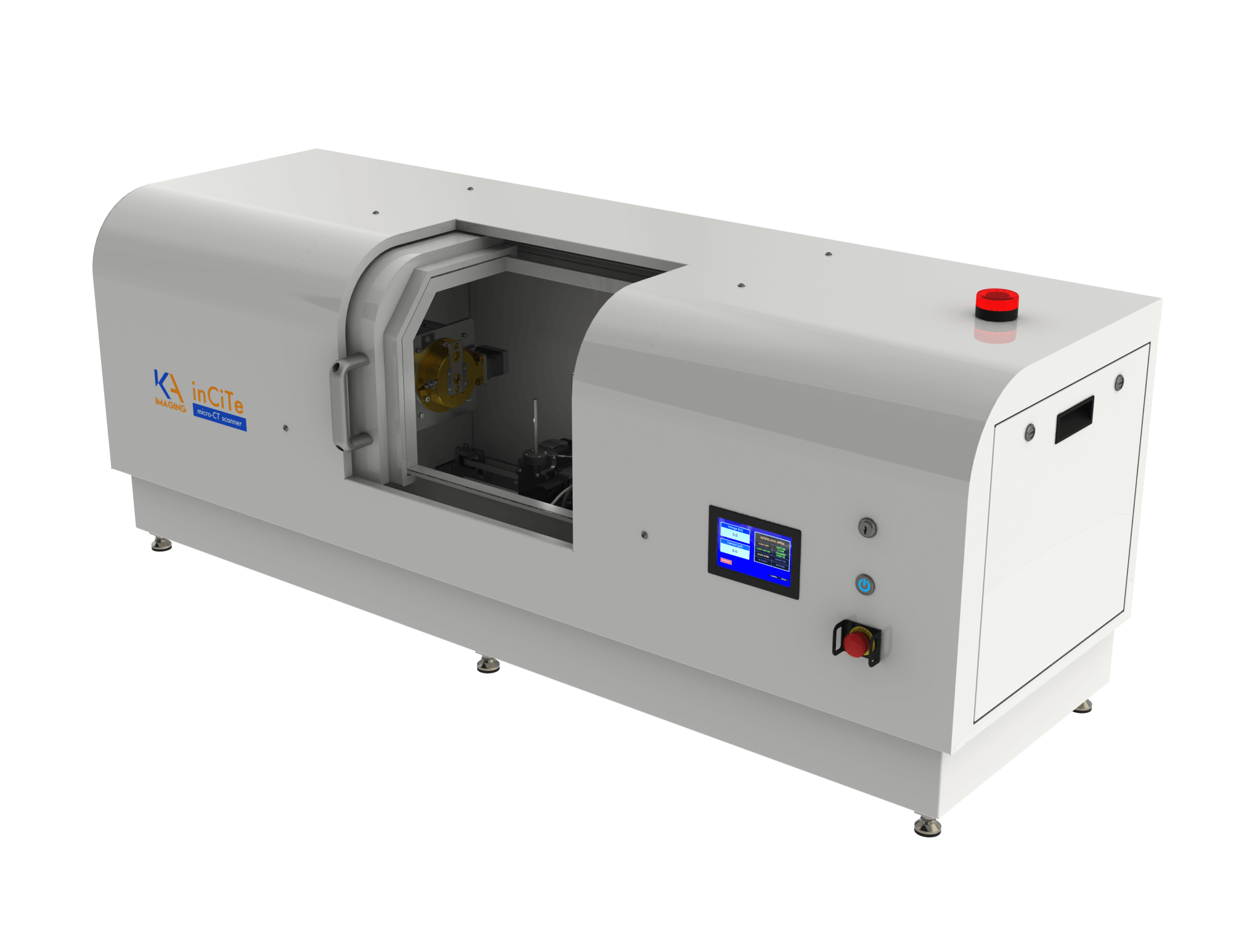
The inCiTe™ 3D X-ray Microscope is designed for high-resolution ex vivo characterization of tissue microarchitecture and structural organization.
View key capabilities
- Phase contrast imaging for better edge enhancement
- Submicron resolution at highest magnification
- Advanced imaging of implants and biomaterials interfaces
- 3D volumetric imaging
- Simplified workflow
Related Resources
Frequently Asked Questions
Are DXA and micro-CT competing methods?
No. DXA and micro-CT are complementary imaging modalities designed to answer different biological questions. DXA is optimized for rapid, low-dose longitudinal assessment of systemic bone and body composition changes. Micro-CT provides high-resolution 3D structural characterization of tissue architecture and quality. Together, they provide a more comprehensive understanding of skeletal biology than either modality alone.
When should a preclinical study use DXA?
DXA is ideal when researchers need:
- Longitudinal in vivo measurements
- Rapid throughput
- Low radiation exposure
- Whole-body assessment
- BMD/BMC tracking over time
- Body composition analysis
- Efficient screening of large cohorts
DXA is especially valuable in:
- Osteoporosis studies
- Metabolic disease research
- Aging studies
- Sarcopenia research
- Growth and development studies
- Longitudinal therapeutic monitoring
When should a preclinical study use micro-CT?
Micro-CT is ideal when researchers require:
- High-resolution imaging
- Trabecular and cortical differentiation
- Structural and architectural analysis
- Implant interface characterization
- Evaluation of fusion masses
Micro-CT is especially valuable in:
- Bone quality assessment
- Osteolytic lesion evaluation
- Implant integration studies
- Spinal fusion research
- Detailed endpoint characterization
What is a practical combined workflow?
A highly effective workflow is:
- Perform baseline DXA before intervention.
- Use DXA longitudinally throughout the study to monitor systemic changes.
- Perform endpoint ex vivo micro-CT on selected tissues.
- Use micro-CT to validate and interpret structural changes underlying DXA findings.
In this workflow, DXA provides efficient longitudinal monitoring, while micro-CT supplies detailed structural context.
Final Thoughts
In preclinical orthopaedics, the strongest conclusions rarely come from a single measurement. DXA provides fast, repeatable, low-dose longitudinal assessment of bone and body composition changes. Micro-CT reveals the three-dimensional structural reality behind those changes.
The result is a more comprehensive understanding of bone biology, not just how much bone exists, but how that bone is organized, connected, and functioning. For modern preclinical orthopaedic research, this distinction is highly valuable.