Publication Highlight: The role of phosphodiesterase 5 inhibitors in attenuating obesity-induced metabolic disorders
Authors: Dan-Gyeong Song, Seongwon Pak, Dae-Chul Shin, Shindy Soedono, Kae Won Cho, Yejin Park, Subin Moon, Sooyeon Jang, Saeha Kim, Sang-Won Han, Keunwook Lee, Jong-Hee Sohn & Chan Hee Lee
Background
Phosphodiesterase type 5 inhibitors (PDE5i) are known to promote blood flow; however, their anti-inflammatory properties as they pertain to metabolic disease remain less clear. As a cost- and time-effective therapeutic agent, the aim of this study was to investigate the role of PDE5i in alleviating obesity and to reveal its underlying mechanisms.
Key Findings
- PDE5i administration into high-fat diet (HFD)-mice showed enhanced systemic insulin sensitivity in the gonadal white adipose tissue (gWAT).
- PDE5i may improve insulin sensitivity by altering adipose tissue macrophage (ATM) polarization in the gWAT, but this effect varies depending on the tissue type.
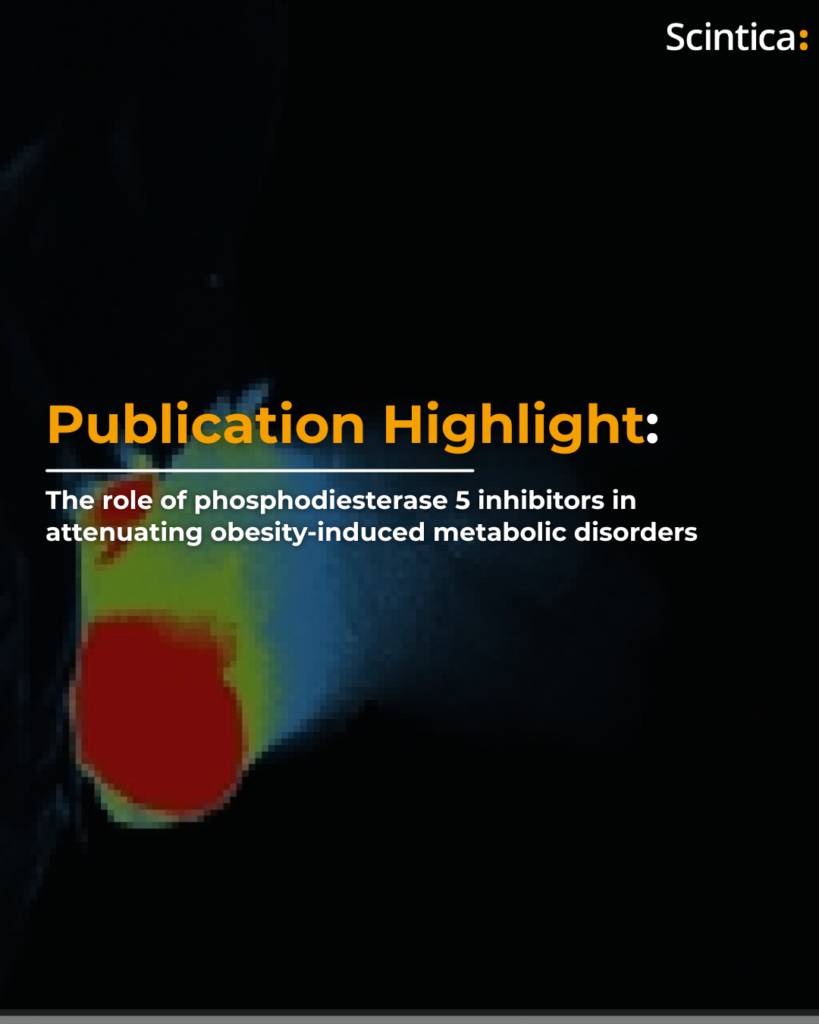
- Functional blood flow was studied in real-time by injecting Evans Blue and tracing its fluorescence signal with the Newton 7.0 optical imaging system. HFD-mice demonstrated rapid fluorescence leakage into the gWAT compared to control diet mice. However, leakage was suppressed in HFD-fed mice administered with PDE5i.
- To assess the anti-inflammatory effects on ATMs, LPS-stimulated macrophage cells were co-treated with various PDEi doses. Suppression of LPS-induced Tnf, Il1β, and Il6 expression in a dose-dependent manner suggests PDE5i plays a role in mitigating inflammation.
Conclusions and Next Steps
The paper summarizes the potential of PDE5i as a therapeutic agent for improving insulin sensitivity and blood flow in HFD mice. Further investigations are required to understand the interactions between vascular and immune cells in the gWAT to determine if the enhanced blood flow is due to reduced inflammation. Additionally, since insulin signalling is associated with the mTOR signalling pathway, in-depth studies are required to understand the complex role(s) of PDE5i within this context.
Product Highlight
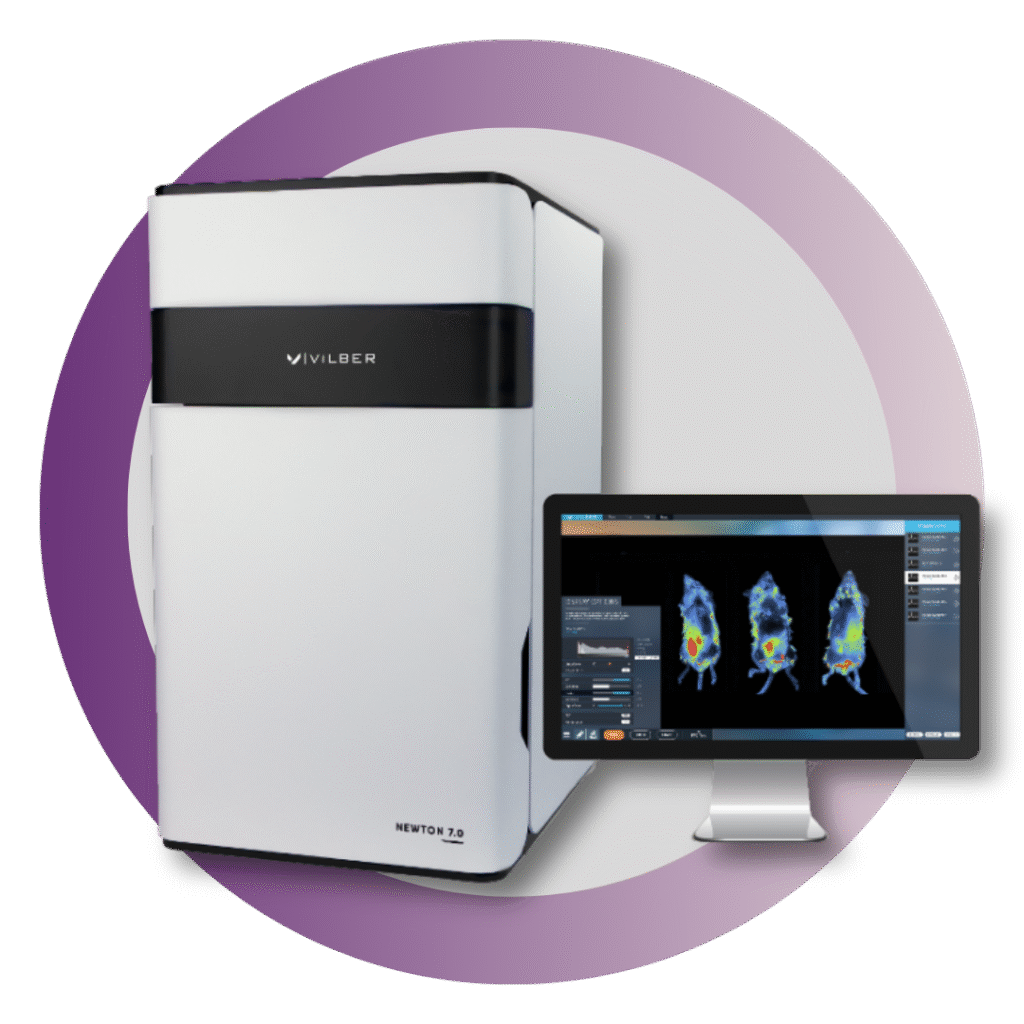
In this publication, the Newton 7.0 optical imaging system enabled high-clarity, real-time imaging of fluorescence leakage within adipose tissue. Its sensitive detection provided the precise vascular readouts needed to establish that PDE5 inhibition can modulate blood flow in obese mice.
Reference
Song DG, Pak S, Shin DC, Soedono S, Cho KW, Park Y, Moon S, Jang S, Kim S, Han SW, Lee K, Sohn JH, Lee CH. Phosphodiesterase 5 Inhibitor Improves Insulin Sensitivity by Regulating Adipose Tissue Macrophage Polarization in Diet-Induced Obese Mice. Diabetes Metab J. 2025 May 22. doi: 10.4093/dmj.2024.0308. Epub ahead of print.