Publication Highlight: Overexpression of IL-32γ inhibits skin cancer formation through suppression of NF-κB and its downstream factors
Yong Sun Lee, Chung Hee Lee, Jun Tae Bae, Kyung Tak Nam, Dae Bong Moon, OK Kyung Hwang, Jeong Soon Choi, Tae Hoon Kim, Hyoung Ok Jun, Yong Suk Jung, Dae Yeon Hwang, Sang-Bae Han, Do Young Yoon and Jin Tae Hong
Background
Interleukin-32 (IL-32) is a cytokine known to play context-dependent roles in inflammation and cancer. IL-32 exists as six splice variants, each exhibiting distinct biological functions across tumour and inflammatory models. While several IL-32 isoforms have been implicated in tumour suppression, the role of IL-32γ in carcinogen-induced skin tumour development has not been fully explored. This study investigated how IL-32γ overexpression influences skin carcinogenesis, with a particular focus on cancer stemness, inflammatory signalling, and downstream mediators regulated by NF-κB.
Key Findings
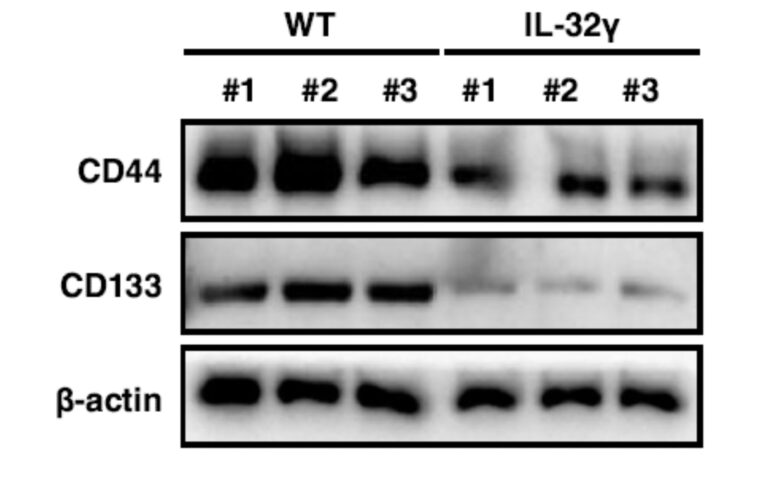
IL-32γ reduced cancer stemness markers: western blot analysis revealed decreased expression of tumour-initiating cell markers CD44 and CD133 in IL-32γ-overexpressing skin cancer cells compared to wild-type controls, indicating suppression of cancer stem-like properties.
Suppression of NF-κB–dependent downstream targets ITGAV and TIMP-1: western blotting demonstrated reduced expression of integrin αV (ITGAV) and tissue inhibitor of metalloproteinases-1 (TIMP-1) (both NF-κB-regulated proteins involved in tumour cell migration, invasion, and stemness). These findings were consistent in both tumour tissue and skin cancer stem cell cultures.
Inhibition of NF-κB signalling and activity: western blot and immunohistochemical analyses showed decreased NF-κB expression and DNA-binding activity in IL-32γ-overexpressing skin cancer stem cells, linking IL-32γ directly to suppression of pro-tumorigenic inflammatory signalling.
Conclusions and Next Steps
This study demonstrated that IL-32γ exerts a strong inhibitory effect on carcinogen-induced skin tumor growth by suppressing cancer stemness and NF-κB–driven inflammatory signaling. By downregulating NF-κB and its downstream effectors ITGAV and TIMP-1, IL-32γ created a tumor microenvironment less permissive to tumor initiation and progression. These findings support further investigation of IL-32γ as a potential therapeutic target in skin cancer.
Product Highlight
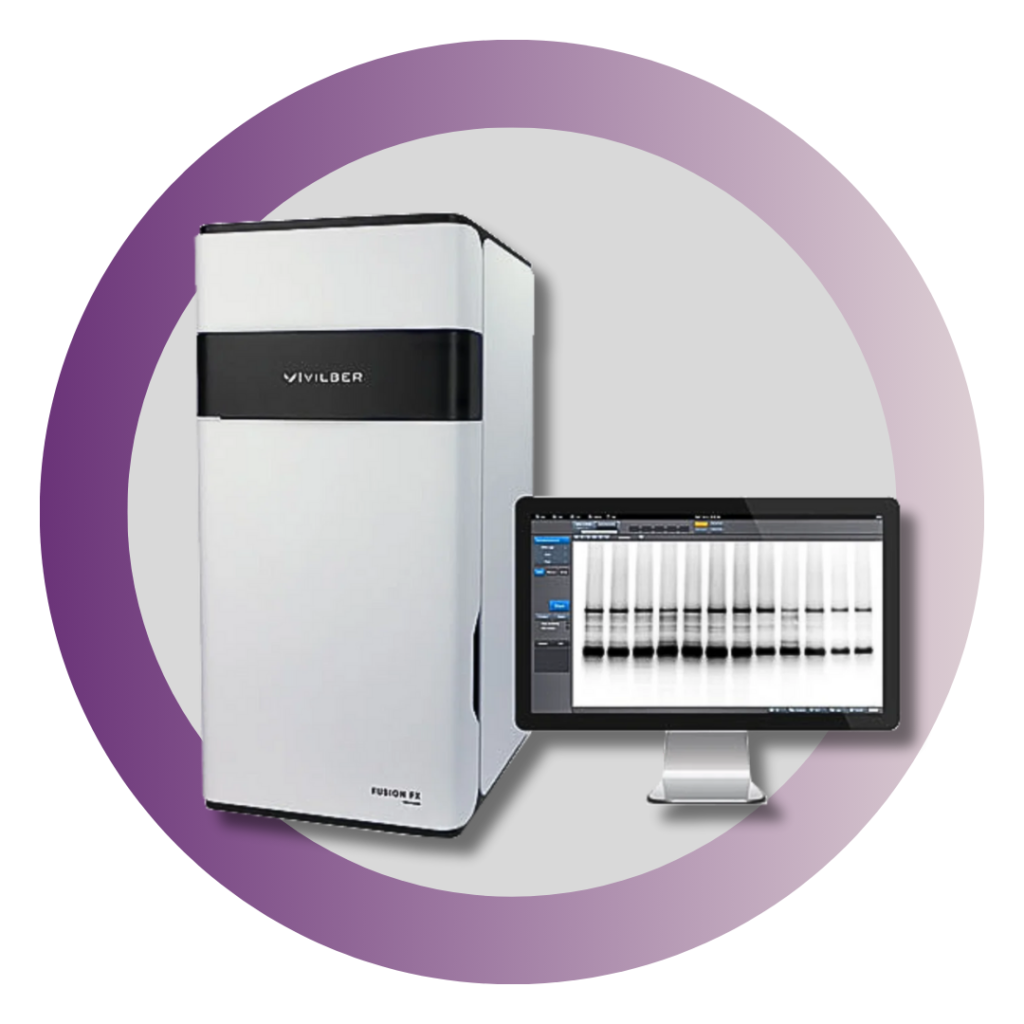
The Fusion FX 7 system was pivotal in this study for accurately detecting and quantifying protein expression changes across multiple signalling pathways. High-quality western blot imaging enabled clear visualization of NF-κB, CD44, CD133, ITGAV, and TIMP-1, allowing the authors to establish a mechanistic link between IL-32γ overexpression and suppression of tumour-promoting pathways. The Fusion FX 7 system’s sensitivity and reproducibility were essential for generating reliable, publication-ready data in this cancer signalling study.
Reference
Kim, D. J., Prabhu, K. S., Gonzalez, F. J., & Peters, J. M. (2006). Inhibition of chemically induced skin carcinogenesis by sulindac is independent of peroxisome proliferator-activated receptor-beta/delta (PPARβ/δ). Carcinogenesis, 27(5), 1105–1112. https://doi.org/10.1093/carcin/bgi346