Publication Highlight: Single High-Dose Erythropoietin Disrupts Bone Homeostasis via Osteoclastogenic Pathways
Anton Gorodov, Albert Kolomansky, Lior Lezerovich, Michelle Piper, Nathalie Ben-Califa, Yankel Gabet, Drorit Neumann
Background
Bone is a dynamic tissue maintained through a tightly regulated balance between bone resorption by osteoclasts and bone formation by osteoblasts. While erythropoietin (EPO) is best known for its essential role in red blood cell production and is widely used to treat anemia, evidence also suggests that EPO can also influence bone remodelling. The purpose of this study was to define the immediate and short-term effects of a single EPO dose on bone turnover, focusing on the bone marrow microenvironment and osteoclastogenic signalling.
Key Findings
To confirm the biological activity of a single high-dose EPO injection, hemoglobin levels were measured for 2 weeks post-injection. A 13% increase in hemoglobin was observed in the first week, followed by a return to baseline at 2 weeks post injection.
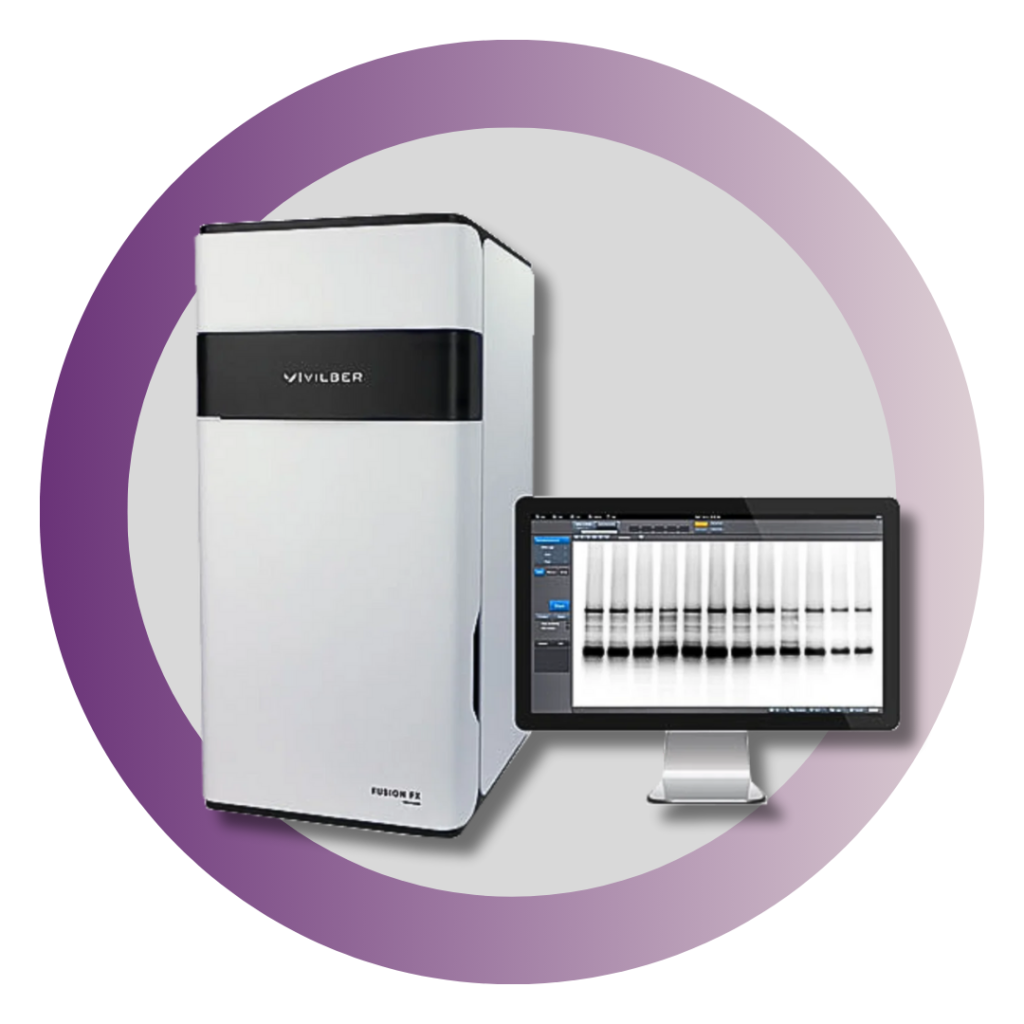
Macrophage colony-stimulating factor (M-CSF) protein levels in bone marrow extracellular fluid were analyzed with Western blotting (using the Fusion FX7) and ELISA to study the changes in osteoclastogenic signaling. M-CSF levels were observed to increase ~2-fold as early as 16 hours post-injection.
To test the impact of higher M-CSF on cellular changes in the bone marrow, CD115-positive cells and osteoclast progenitors were quantified with flow cytometry. Both cell types were observed to increase by 2 weeks post-injection.
Using micro-CT, a ~33% reduction in femur bone volume was observed 2 weeks after injection, demonstrating rapid and sustained bone deterioration.
Conclusions and Next Steps
This study showed that high-dose EPO administration was sufficient to induce bone loss in mice. The data identified a rapid, transient increase in M-CSF as a key early event, which correlated to osteoclast precursor expansion, increased bone resorption, and temporary suppression of bone formation.
Product Highlight
In this study, the Fusion FX7 imaging system played a critical role in detecting early molecular changes within the bone marrow microenvironment following EPO administration. High-sensitivity chemiluminescence imaging enabled clear visualization and accurate quantification of transient increases in M-CSF protein levels from bone marrow extracellular fluid samples. The system’s impressive signal-to-noise ratio, high dynamic range, and strong reproducibility supported reliable comparisons across early time points, where subtle, yet biologically meaningful differences were observed.