
Article Review: New Approach Methodologies (NAMs)
Therapeutic Efficacy of Human Skin Equivalents Fabricated via Droplet-Based Bioprinting and Nebulization Technology
Molecular & Cellular Toxicology (2023)
System Used:
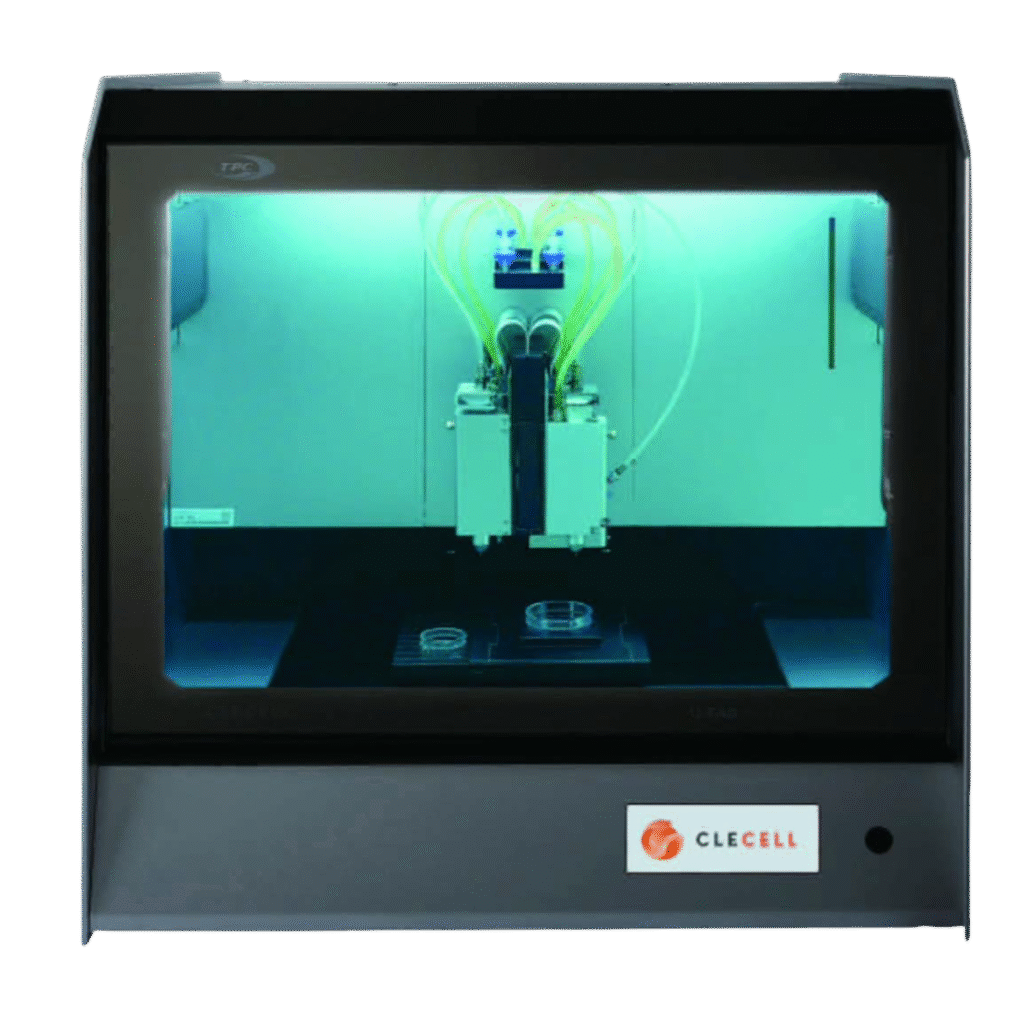
Activo Bioprinter
Overview:
This study presents a novel approach to fabricating human skin equivalents (hSKE) using droplet-based 3D bioprinting combined with nebulization technology. Unlike traditional manual or extrusion-based methods, this technique allows for high reproducibility, uniformity, and improved cell viability in skin constructs.
Methodology:
- Dermis was created by printing collagen bioink with human dermal fibroblasts, stabilized using nebulized sodium bicarbonate as a crosslinking agent.
- The epidermis was formed by printing keratinocyte bioink, followed by air–liquid interface culture to induce stratification.
- Constructs were compared with native human and mouse skin to confirm morphological similarity.
- Efficacy was evaluated through a skin grafting model.
Outcome
- Bioprinted hSKE Mimics Native Skin: hSKE fabricated using droplet-based bioprinting and nebulization techniques can effectively replicate the dermal and epidermal architecture of native skin, including the keratinization process of keratinocytes within the epidermis.
- Cell viability: Droplet-based printing at low pressure preserved fibroblast and keratinocyte survival rates (>84%).
Therapeutic efficacy: In wound healing models, hSKE transplantation:
Accelerated wound closure
Promoted vascularization (over 2× more blood vessels than collagen-only controls)
Supported mature collagen deposition and organized dermal regeneration
- Advantages of nebulization: By spraying crosslinking agents as a fine mist, nebulization prevented nozzle clogging and enabled printing of low-viscosity collagen bioinks without cell loss.
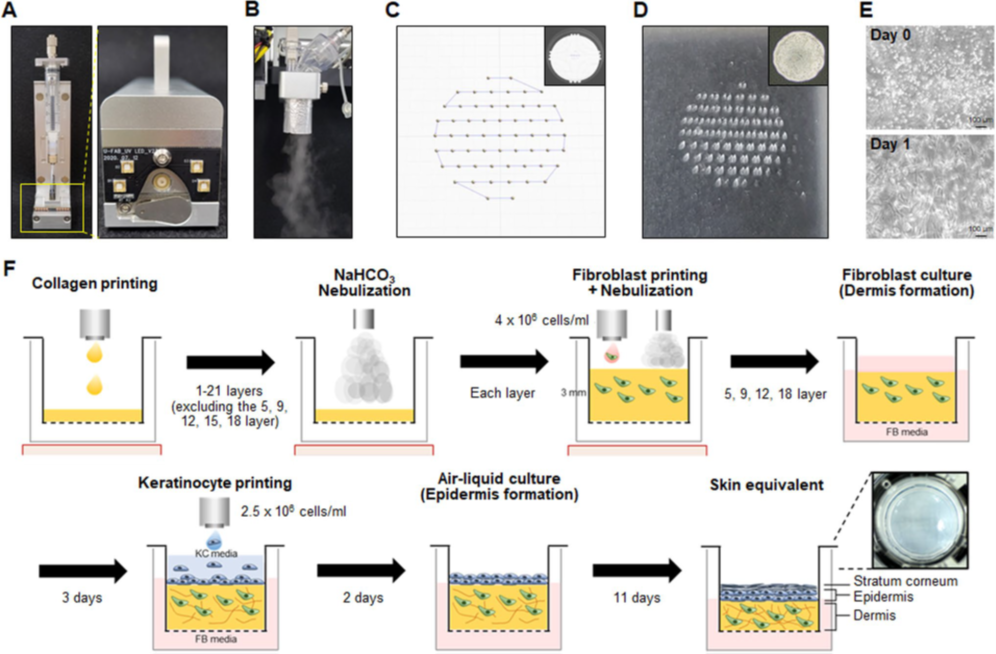
Figure 1-Fabrication of hSKE using droplet-based bioprinting with nebulization. A: Droplet nozzle, B: Nebulizer spray, C: Printing design, D: Printed collagen, E: Fibroblasts in collagen (0 & 1 day), F: Schematic of hSKE fabrication. Scale bar: 200 μm.
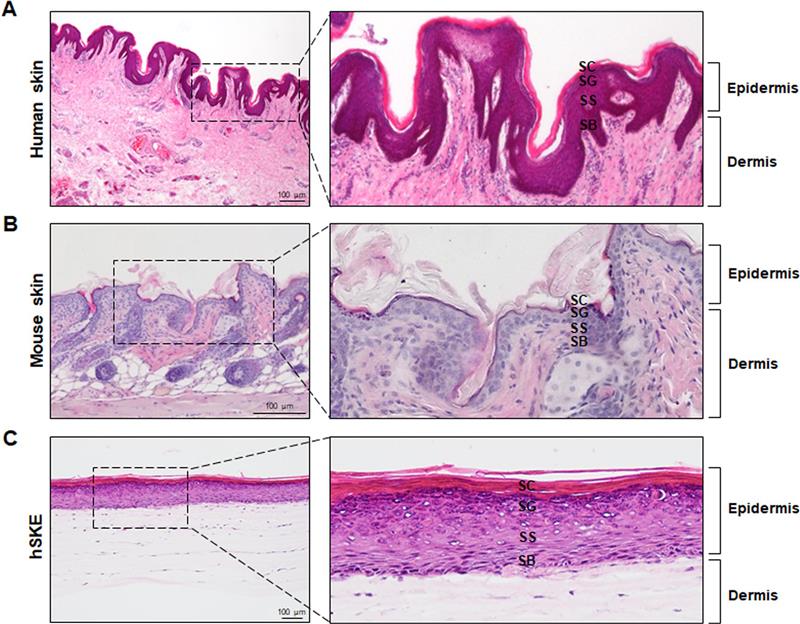
Figure 2-Comparison of morphological similarities between manufactured hSKE and native skin through H&E staining. A Human native skin isolated from circum tissue. B Mouse native skin sampled from the skin of nude mice. C hSKE produced by printing each major cell. Scale bar: 100 μm
Conclusion:
Nebulization-enabled droplet bioprinting is a powerful method for fabricating reproducible, scalable, and functional human skin equivalents. Beyond wound healing applications, this approach offers significant promise as a New Approach Methodology (NAM) in dermatology, cosmetics, and drug development. Future work will focus on hiPSC-derived skin equivalents, enabling personalized and patient-specific skin therapies.

